What Is Sri Lalita Sahasranama and Why Is It Significant?
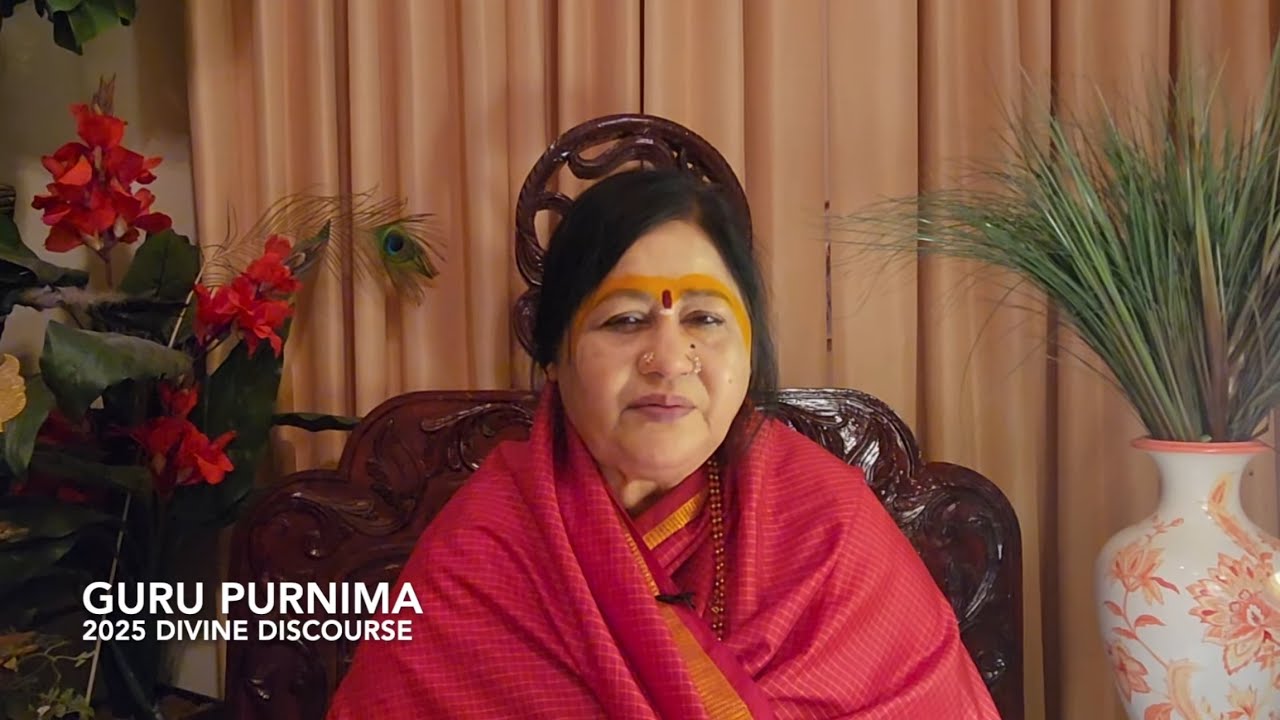
The Sri Lalita Sahasranama is a sacred text containing 1000 names describing the qualities, powers, and manifestations of the Divine Mother, known in this context as Sri Lalita Tripurasundari. According to Sri Karunamayi, this text is not a poetic embellishment or emotional outpouring alone, but a precise cosmological blueprint that names the structure of consciousness itself.
Karunamayi emphasizes that each name in the Sahasranama carries within it specific vibrational frequencies and spiritual potencies. Unlike generic praise, these 1000 names correspond directly to different aspects of creation, the chakra system, and the mechanics of consciousness unfolding within the human body. She notes that the study of the Sahasranama was traditionally undertaken by advanced practitioners seeking to understand the Divine Mother not as a concept but as the living reality pervading all existence.
The significance lies in recognition that the Divine Mother, in her form as Lalita Tripurasundari, is the organizing principle of the universe—often called Jagat Janani (Mother of the Universe). Each name reveals one facet of how this principle manifests: as sustainer, destroyer, creator, healer, and liberator. By engaging with these names through chanting and meditation, the practitioner aligns their consciousness with these cosmic patterns.
How Does Chanting the Sahasranama Transform the Practitioner?
Sri Karunamayi describes chanting the Sahasranama as a systematic practice that reorganizes the subtle energy body of the practitioner. The mechanism works through sound vibration (mantra) and focused intention (bhakti). When the sacred names are chanted with attention and devotion, they activate specific nerve channels (nadis) and energy centers (chakras) within the spinal column.
Central to this transformation is the awakening of Kundalini—the dormant spiritual energy coiled at the base of the spine. The practice of Sahasranama chanting, combined with visualization of the Sri Chakra (the geometric yantra associated with the Divine Mother), creates conditions for this sacred force to rise through the chakras. As Kundalini ascends, it brings with it heightened perception, emotional purification, and direct experiential knowledge of the Divine.
Karunamayi emphasizes that this is not merely psychological or emotional benefit. The practice alters the practitioner's neurological and energetic systems in measurable ways. Regular chanting of the Sahasranama develops:
- Refined intuition and inner knowing, as the higher chakras (especially Ajna and Sahasrara) activate
- Dissolution of mental patterns and psychological obstacles that obscure divine consciousness
- Strengthened connection to divine grace and protection, experienced as a palpable presence
- Expanded capacity to serve others with compassion rooted in recognition of the Divine Mother in all beings
The transformative power of the Sahasranama depends significantly on the quality of devotion brought to the practice. Mechanical chanting without sincere yearning produces limited results. But when the practitioner approaches the names with genuine longing, humility, and faith—recognizing each name as an invitation to deeper surrender—the practice becomes a vehicle for direct spiritual awakening.
What Is the Connection Between the Sahasranama and the Sri Chakra?
A recurring theme in Karunamayi's teaching is the relationship between the 1000 names and the Sri Chakra, the sacred geometric diagram at the heart of Tantric practice. The Sri Chakra is not merely a symbol; it is a living map of consciousness containing nine nested triangles surrounded by circular rings, representing the progressive unfolding of the Divine Mother's energy from the transcendent absolute to the material world.
Each of the 1000 names corresponds to a specific geometric point, angle, or intersection within the Sri Chakra. By chanting the names while meditating on the Chakra, the practitioner creates a resonance between the verbal mantra and the visual form. This dual engagement—sound and form working together—accelerates the activation of the Chakra within the practitioner's own subtle body.
When the Sri Chakra awakens internally, Karunamayi teaches that the practitioner begins to perceive reality not as separate objects but as unified fields of divine consciousness. The boundaries between self and other dissolve. The universe is experienced not as something external to be grasped, but as an expression of the Divine Mother's own being in which the individual is a conscious cell.
The Sahasranama, then, is both a tool for activating the Sri Chakra and a description of what unfolds as that activation occurs. The names map the territory; chanting the names lights the path through that territory.
What Specific Benefits Does Karunamayi Describe for Regular Practice?
Sri Karunamayi addresses practical outcomes that practitioners can expect from sustained engagement with the Sahasranama:
- Material Blessings and Protection: The teaching acknowledges that the Divine Mother meets practitioners where they are. Those chanting the Sahasranama for prosperity, health, or protection receive grace in those dimensions. Karunamayi does not dismiss these needs as unspiritual; rather, she frames them as early fruits of practice that sustain faith until the practitioner ripens for deeper realizations.
- Removal of Inner Obstacles: Each name of the Sahasranama represents a quality or power of the Divine Mother that counteracts specific limitations in human consciousness. For example, certain names awaken clarity where there is confusion, courage where there is fear, and compassion where there is hardness of heart. By chanting these names, the practitioner gradually integrates these divine qualities.
- Enhanced Intuitive Knowing: As the practice deepens, practitioners report spontaneous access to knowledge they did not acquire through study. This occurs because the activation of higher chakras (especially the Ajna—the "third eye"—and Sahasrara—the crown chakra) opens channels of direct perception. The Sahasranama is a technology for opening these channels systematically.
- Unshakeable Inner Peace: Karunamayi describes a quality of peace that arises not from suppressing life's difficulties but from recognizing that even challenges are expressions of the Divine Mother's compassionate design. This peace is rooted in trust—the deep knowing that one is always held, always guided, and always loved by the supreme intelligence pervading creation.
How Should One Approach the Practice of Chanting?
Sri Karunamayi provides guidance on the conditions that support fruitful practice of the Sahasranama. First, the physical and mental setting matters. Chanting in a space dedicated to spiritual practice—whether a home altar or a temple—establishes an energetic field conducive to deeper states. Clean surroundings, a calm mind, and freedom from urgent distractions create the foundation.
Second, the quality of intention shapes the practice. One may approach the Sahasranama with various valid purposes: seeking healing, desiring spiritual awakening, honoring the Divine Mother, or cultivating virtue. Each of these intentions is legitimate. However, Karunamayi emphasizes that the highest approach is to chant with recognition that the Divine Mother is not distant or external but the very consciousness within one's own being. To chant the Sahasranama is to invoke and honor the Supreme Consciousness that one fundamentally is.
Third, consistency matters more than duration. Chanting a few names with full attention daily is more powerful than chanting thousands of names with a distracted mind. Many practitioners establish a personal daily practice, perhaps chanting 10-27 names each morning or evening, reciting with awareness of their meaning and allowing the vibrations to resonate throughout the body.
Fourth, Karunamayi acknowledges that different practitioners will naturally gravitate toward different names within the Sahasranama. One name may call to a practitioner repeatedly, resonating with their particular spiritual work or life situation. This is not random; it reflects the guidance of the Divine Mother herself drawing the practitioner's attention to the names most needed for their current unfolding.
What Is the Relationship Between Individual Consciousness and the Divine Mother?
A core teaching in Karunamayi's discourse is that the individual self is not separate from the Divine Mother but rather an individualized expression of her consciousness. The 1000 names are not describing someone external or distant but aspects of one's own deepest nature.
When a practitioner chants a name like "Jagat Janani" (Mother of the Universe), they are simultaneously invoking the Divine Mother as the supreme creator and acknowledging her as the life-force sustaining their own body and mind in each moment. The practice dissolves the false boundary between devotee and beloved, worshiper and worshipped.
Karunamayi emphasizes that this non-duality is not a philosophical concept to be intellectually understood but a living reality to be directly experienced. The Sahasranama is a systematic path for facilitating this experience. Each name is a doorway; chanting is the passage; awakening is the destination.
Where to Go from Here
For those drawn to explore the Sri Lalita Sahasranama based on this teaching, several next steps are natural:
- Obtain a text of the Sahasranama: Full translations with commentary exist in multiple languages. Beginning with a version that includes meanings allows the chanting to be infused with understanding.
- Establish a daily practice: Start small—perhaps 27 names daily (one full cycle of a traditional sequence)—and gradually extend as the practice becomes integrated into your rhythm.
- Engage with the Sri Chakra: Obtain or create a visual representation of the Sri Chakra and spend time gazing upon it during or after chanting. This engages both the auditory and visual channels of spiritual knowledge.
- Study with a qualified teacher: While the Sahasranama can be practiced independently, guidance from a teacher grounded in this tradition—particularly one who has personal realization of the Divine Mother—accelerates the journey and clarifies obstacles.
- Cultivate the emotional context: The practice bears fullest fruit when supported by genuine gratitude, reverence, and willingness to serve. Consciously developing these attitudes—through service, study of sacred texts, and meditation—creates the soil in which the seeds of the Sahasranama practice can bloom.