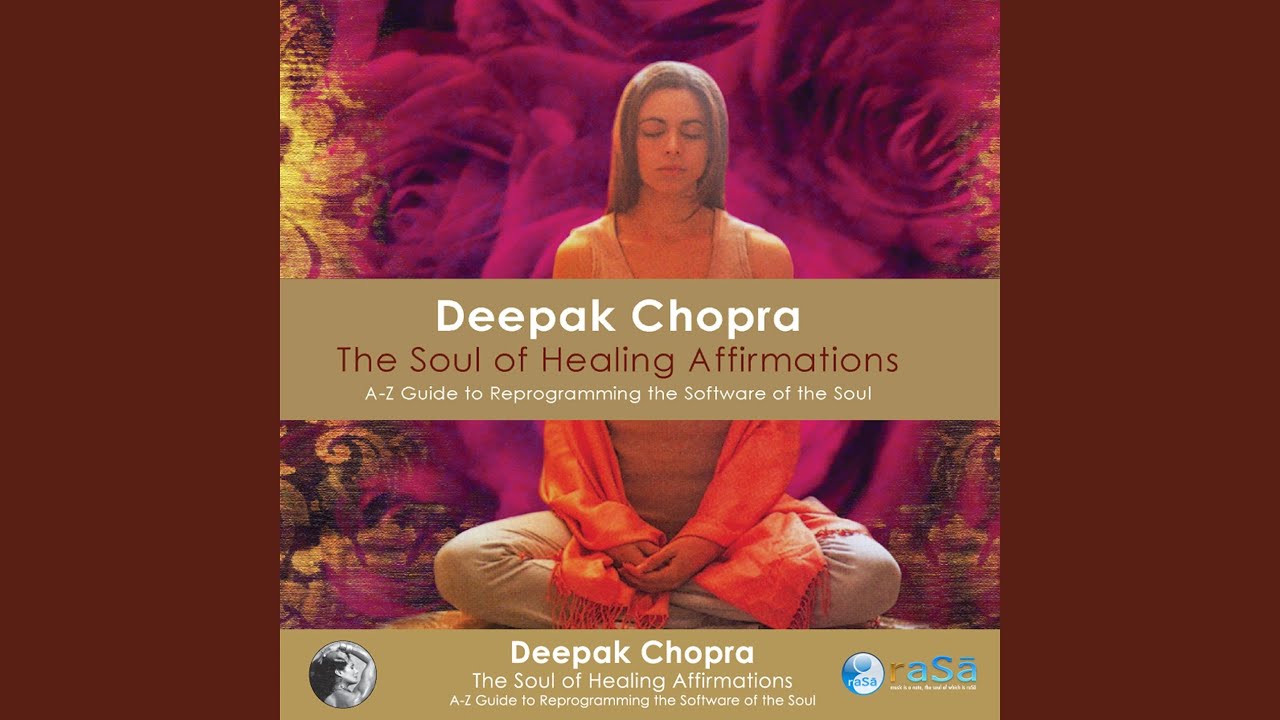
Trust is not blind faith but a foundation for healing that operates at the level of consciousness itself. In this brief affirmation, Deepak Chopra invites us to examine what it means to trust in the body's innate wisdom, the intelligence of the universe, and our own capacity for growth. The teaching suggests that trust—when aligned with awareness—becomes a healing force that supports both physical and psychological wellbeing.
What Is Trust in the Context of Healing?
Trust, as a spiritual and healing concept, is often misunderstood as passive submission or wishful thinking. In the framework Deepak Chopra presents through "Soul of Healing Affirmations," trust is something far more active and rooted in awareness. It is the deliberate cultivation of faith in processes that may not yet be visible to the rational mind—the healing capacity of the body, the intelligence embedded in nature, and the resilience of consciousness itself.
When we trust in healing, we're not denying illness or pain. Rather, we're acknowledging that alongside the wound or disease exists an equally powerful force oriented toward wholeness. The body contains countless self-regulating mechanisms that operate without conscious effort: immune responses, cellular regeneration, and homeostatic balance. Trust, in this sense, means aligning our conscious awareness with these deeper processes rather than fighting against them through fear, doubt, or denial.
Why Does Trust Matter in the Healing Process?
Research in psychoneuroimmunology has long established that our mental state directly influences our physical health. Fear, anxiety, and doubt trigger stress responses that suppress immune function and slow healing. Conversely, calm, confidence, and trust activate the parasympathetic nervous system—the body's "rest and digest" mode—which is when true healing and repair occur.
Trust reduces the neurochemical interference that worry creates. When we spend mental and emotional energy doubting whether we'll heal, we're dividing the body's resources. The energy that could go toward repair is instead allocated to stress response. By cultivating trust, we essentially give the body permission to do what it's designed to do.
This is not metaphorical. The placebo effect—which demonstrates that belief alone can trigger real physiological change—shows us that consciousness and biology are not separate domains. Trust is the mechanism through which consciousness influences matter.
How Does Trust Connect to Consciousness?
In the philosophical framework Chopra draws from—particularly Vedantic and systems-thinking approaches—consciousness is not confined to individual thoughts or beliefs. Instead, consciousness is the fundamental field from which all experience arises. Trust, then, is not just a personal attitude; it's an alignment with the larger intelligence of the universe.
When we trust, we're stepping out of the isolated ego-mind (which perceives threats, scarcity, and separation) and into awareness of interconnection. We begin to see that we are not separate from nature, but expressions of it. The same intelligence that grows a seed into a tree, that heals a wound, that orchestrates the seasons—that intelligence is also within us.
This shift in consciousness is not achieved through positive thinking alone, but through direct recognition of how the universe has already sustained us countless times. Every breath we take, every meal we digest, every night's sleep that restores us—these are demonstrations of trust-worthy processes already at work.
Can Trust Be Developed as a Practice?
Yes. Trust is not something we either have or don't have; it's a capacity that grows through practice. Affirmations—particularly those in "Soul of Healing Affirmations" accompanied by music and intention—are one method of cultivating this capacity. By repeatedly affirming trust, we rewire neural pathways and retrain the nervous system toward receptivity rather than defensiveness.
Practical ways to develop trust include:
- Noticing where you've already been supported—reflecting on times when things worked out, healing occurred, or needs were met, even unexpectedly. This builds evidence that the universe is not hostile.
- Releasing the illusion of total control—accepting that some outcomes depend on factors beyond our individual will. This paradoxically increases effectiveness because we act with full conviction without attachment to results.
- Meditating on interconnection—spending time in stillness to experience directly your connection to larger wholes: nature, community, the biosphere.
- Practicing gratitude—acknowledging what has been given, which shifts perception from scarcity to abundance, from threat to trust.
- Working with affirmations intentionally—using language that aligns the nervous system with healing states, as the audio affirmations do through their pairing of voice, words, and music.
What Role Does Trust Play in Personal Transformation?
Transformation—whether healing from illness, grief, or limiting beliefs—requires a willingness to release what is familiar and move into uncertainty. This is where trust becomes essential. Without trust, we cling to what we know, even if it causes suffering. With trust, we can release the old and remain open to new possibilities.
Every genuine change involves a death of sorts: the death of an old identity, old patterns, old ways of being. Trust allows us to move through this dissolution without panic. It allows us to believe that on the other side of what is ending is something we cannot yet see but can rely upon: our own resilience, the support of life itself, and the possibility of integration and wholeness.
This is why affirmations are more than feel-good statements. They are declarations that reprogram the nervous system and retrain consciousness to recognize and align with trustworthy processes that are already operating. When Chopra pairs the concept of trust with music and repetition, he's using sound and rhythm to deepen the entrainment of this teaching into the body and mind.
Where to Go From Here
If you're drawn to explore trust as a healing practice, begin where you are. Notice one area of your life where you struggle with trust—perhaps your body's ability to heal, or life's ability to provide. Rather than fighting that doubt directly, gently expose yourself to evidence of trustworthiness. Keep a simple journal of moments when things worked out, when the body healed, when needs were met. Over weeks, you'll build a felt sense of trust that goes beyond intellectual belief. Consider exploring guided affirmations, which combine the power of language with music and rhythm to shift your nervous system. And in moments of fear or doubt about healing, return to the simple truth: the same intelligence that beats your heart and digests your food is also orchestrating your healing, whether you consciously trust it or not. Trust is ultimately an invitation to align your awareness with processes that are already happening, and to stop resisting them through doubt.