EveryEvent Rome

Alle Events durchsuchen

Find every event in Rome

events

Concerts & Live Music
Festivals
Sports & Recreation
Food & Drink
Arts & Culture
Community
Family & Kids
Nightlife
Comedy
Theater
Beliebte Reiseziele
BaliSedonaLos AngelesCosta RicaNew YorkSan FranciscoAustinMiamiJoshua TreeTulum
Alle Kategorien anzeigenAlle Reiseziele anzeigen

Alle Funktionen entdecken

Leistungsstarke Tools für Ihre Veranstaltungen

Plattform-Funktionen

Intelligente dynamische Preisgestaltung
Ticket-Kategorien
Sitzplatzreservierung
Warenkorbabbruch-Wiederherstellung
Besucher-Wiedergewinnung
Spenden & Staffelpreise
Affiliate-System
Ticket-Scanner
Rabattcodes
Individuelle Fragen
Ticket-Teilen
Upsells & Extras
Analysen & Berichte
E-Mail-Sequenzen
Warteliste / Benachrichtigen / Erinnern
Entdecken
Discovery HubArtists & PerformersVenuesKnowledge Base
Alle Funktionen anzeigenÜber uns
PreiseBlog
Language
Saved events
Alle Veranstaltungen durchsuchen

events

Concerts & Live MusicFestivalsSports & RecreationFood & DrinkArts & CultureCommunityFamily & KidsNightlife

Beliebte Reiseziele

BaliSedonaLos AngelesCosta RicaNew YorkSan Francisco

Entdecken

Discovery HubArtists & PerformersVenuesKnowledge Base

Plattform-Funktionen

Intelligente dynamische PreisgestaltungTicket-KategorienSitzplatzreservierungWarenkorbabbruch-WiederherstellungBesucher-WiedergewinnungSpenden & StaffelpreiseAffiliate-SystemTicket-ScannerRabattcodesIndividuelle FragenTicket-TeilenUpsells & ExtrasAnalysen & BerichteE-Mail-SequenzenWarteliste / Benachrichtigen / Erinnern
Alle Funktionen anzeigenÜber uns
PreiseBlog
AnmeldenRegistrierenVeranstalter
  • Browse All Events
  • Concerts & Live Music
  • Festivals
  • Sports & Recreation
  • Food & Drink
  • Arts & Culture
  • Community
  • Family & Kids
  • Nightlife
  • Alle Kategorien →
  • All Destinations →
  • For Promoters
  • For Artists
  • For Venues
  • For Festivals
  • For Event Spaces
  • For Nonprofits
  • For Bloggers
  • For Speakers
  • Brand Ambassador
  • Case Studies
  • 350.000+ Käufernetzwerk
  • Warenkorbabbruch-Wiederherstellung
  • Intelligente dynamische Preisgestaltung
  • Ticket-Kategorien
  • Wiederkehrende Veranstaltungen
  • Sitzplatzreservierung
  • Affiliate-System
  • Warteliste / Benachrichtigen
  • Ticket-Scanner
  • Einbettungs-Widget
  • Event-Syndication
  • Nachrichten
  • Integrationen
  • Berichte
  • Alle Funktionen →
  • Über uns
  • Das Ökosystem
  • Blog
  • Glossar
  • Inspiration
  • Hilfe-Center
  • Kontakt
  • API-Dokumentation
  • Marken-Assets
  • Karriere
  • Presse
  • Nutzungsbedingungen
  • Datenschutzrichtlinie

Events

  • Browse All Events
  • Concerts & Live Music
  • Festivals
  • Sports & Recreation
  • Food & Drink
  • Arts & Culture
  • Community
  • Family & Kids
  • Nightlife
  • Alle Kategorien →

Getaways

  • All Destinations →

For Organizers

  • For Promoters
  • For Artists
  • For Venues
  • For Festivals
  • For Event Spaces
  • For Nonprofits
  • For Bloggers
  • For Speakers
  • Brand Ambassador
  • Case Studies

Funktionen

  • 350.000+ Käufernetzwerk
  • Warenkorbabbruch-Wiederherstellung
  • Intelligente dynamische Preisgestaltung
  • Ticket-Kategorien
  • Wiederkehrende Veranstaltungen
  • Sitzplatzreservierung
  • Affiliate-System
  • Warteliste / Benachrichtigen
  • Ticket-Scanner
  • Einbettungs-Widget
  • Event-Syndication
  • Nachrichten
  • Integrationen
  • Berichte
  • Alle Funktionen →

Unternehmen

  • Über uns
  • Das Ökosystem
  • Blog
  • Glossar
  • Inspiration
  • Hilfe-Center
  • Kontakt
  • API-Dokumentation
  • Marken-Assets
  • Karriere
  • Presse
  • Nutzungsbedingungen
  • Datenschutzrichtlinie
EveryEvent
© 2026 EveryEvent Rome. Alle Rechte vorbehalten.
Inspiration

Go Talk To Mary: ReconnectingWith Your Inner Maternal Wisdom

Donna De Lory
Donna De Lory
Mar 30, 2024
6 Min. Lesezeit
Ansehen · 7

Donna De Lory's song "Go Talk To Mary" functions as a spiritual practice encoded in music, inviting listeners to reconnect with an inner maternal presence—symbolized as "Mary"—that holds memory, love, and remembrance of who we truly are. The song addresses the spiritual loss that comes from chasing external validation and forgetting our essential self, offering a pathway back to self-love and authenticity through dialogue with this inner wisdom figure.

Lesen · 7 Abschnitte

Who Is Mary? Understanding the Central Metaphor

The song opens with a vivid landscape: "Where the green grass grows forever / Where the mountains meet the sky / You'll find her there / She's always been there." This is not a literal Mary—it is the maternal consciousness within each listener, the part of ourselves that existed before we learned to perform, achieve, or seek approval. De Lory locates this presence in a timeless space, "a little house on the hill," with "faded skin," suggesting the wisdom of age and experience.

This Mary figure is described as "the one to remember / The one that you left behind"—indicating that we have collectively abandoned this internal maternal witness in pursuit of external goals. The phrase "she's the one who knows you" is crucial: this presence knows us before we became what we think we should be. In contemplative traditions, this recalls the concept of the witness consciousness or the true self that observes the ego's construction.

What Does It Mean to Forget Ourselves?

The song names a specific spiritual condition: forgetting. "Have you forgotten so much?" De Lory asks repeatedly, diagnosing a core wound. This forgetting manifests in several ways. First, there is the forgetting of origin: "You don't know where you're going this night / If you don't know where you came from." This echoes the Sufi saying that one cannot arrive at a destination if one has forgotten where one began—spiritually, psychologically, or personally.

The song then shifts the lens to embodiment: "Look down at your hands now / The hands of a woman now / What have you learned / Have you learned to forget?" This moment invites the listener to become aware of their own physicality and to recognize that the body itself carries memory—of who raised them, who loved them, what they learned before they learned to judge themselves. The "faded skin" of the mother figure and the hands of the woman listening are the same flesh, marked by time and care.

De Lory describes another layer of this forgetting: "All the memories are like lying strangers / Images changing colors in your mind." When we disconnect from our true center, even our own history becomes unreliable, fragmented, shifting. We lose our narrative coherence. We become strangers to ourselves.

The Cost of Abandoning the Self

A crucial turning point comes when De Lory articulates what we have sacrificed in the pursuit of external validation: "Just to be loved / Just to please / You gave your body / You gave your soul / The one you forgot to be was always yourself." This is a precise diagnosis of a common spiritual malady—the surrender of authentic presence in exchange for conditional affection or approval.

The song suggests that we have bartered away our integrity piece by piece: first the body (through conformity, through working for others' desires), then the soul (through abandoning our own values and instincts), until finally we realize we have forgotten to be ourselves. This is not a moral judgment but a recognition of a pattern that keeps us trapped in seeking external reassurance for an internal emptiness.

Why Does Self-Love Feel Like Revolution?

When De Lory sings, "You did it / Love yourself," the phrasing is significant. "You did it" can read as both accusation and affirmation—you did the damage, and you did the healing. The command "love yourself" arrives as simple, almost stark, after pages of diagnosis. Yet in context, this is profound: self-love is framed not as selfish indulgence but as the work of remembering and integration.

The song emphasizes that this return is about finding one's original innocence: "Where is the child you left behind?" The child—in spiritual language—represents the part of us that existed before shame, before the internalized voices of others, before we learned to doubt our own lovability. The maternal presence (Mary) holds this memory of our original wholeness.

The Practice of Return

The repeated refrain "Go talk to Mary" functions as an instruction. It is not passive nostalgia but active dialogue. By returning to this inner maternal presence—through meditation, prayer, journaling, or simply conscious attention—we re-establish the relationship with the part of ourselves that has never left us. The song frames this return as homecoming: "Let her take you home."

De Lory's musical composition reinforces this message through repetition and cadence, creating a mantra-like quality. The listener is invited not just to understand the message intellectually but to be rhythmically entrained into the practice of remembering. The song itself becomes a bridge between the fragmented present self and the integrated self that Mary represents.

Forgiveness and Non-Isolation

Toward the end, De Lory shifts from commands to reassurance: "You're not alone / You're not alone anymore." This addresses the existential loneliness that often accompanies self-abandonment. When we forget ourselves and chase others' approval, we become fundamentally alone—alienated from our own truth. But reconnection with the inner maternal presence reverses this isolation. We are accompanied; we are known; we are held.

The song also touches on forgiveness: "Find yourself / Forgive yourself." These are not separate acts but moments in the same arc of return. Forgiveness of ourselves for having forgotten, for having given away our power, for having sought in others what only our own witness consciousness can provide.

Where to Go From Here

Listeners interested in exploring the themes of "Go Talk To Mary" might deepen the practice through sustained meditation on inner dialogue—specifically, conversations with the wise, maternal presence within. This could take the form of writing, visualization, or contemplative walking. The song also invites reflection on where and how you have abandoned yourself in pursuit of external approval, and what it might feel like to reclaim that energy.

De Lory's album "Hear In Heaven" continues these explorations of spiritual return and inner presence. The practice suggested by "Go Talk To Mary" is not a one-time experience but an ongoing cultivation of relationship with the deepest, most loving part of ourselves—the part that has been waiting all along.
Transcript

[0:02] [Music]

[0:20] where the Green Grass Grows forever

[0:24] where the mountains meet the sky you'll

[0:28] find her there

[0:32] she's always been

[0:36] there go to her now back to that little

[0:41] house on the hill back to her faded skin

[0:47] where she raised you

[0:49] up her perfect gift of

[0:54] love have you forgotten so

[0:58] much go talk to

[1:01] Mary she's the one to

[1:04] REM the one that you left

[1:08] behind go talk to

[1:11] Mary she's the one who knows you let her

[1:16] take you

[1:21] home look down at your hands

[1:26] now the hands of a woman now what have

[1:31] you

[1:32] learned have you learned to

[1:37] forget forgotten so

[1:40] much now all the memories are like lying

[1:45] strangers images changing colors in your

[1:51] mind you don't know where you're going

[1:55] this

[1:56] night if you don't know where you came

[2:00] from from Jack go talk to

[2:04] Mary she's the one to

[2:07] REM one that you left

[2:10] behind go talk to

[2:13] Mary she's the one who knows you let her

[2:18] take you home have you forgot

[2:23] something haven't you forgotten why you

[2:29] came

[2:35] just to be loved just to please you gave

[2:39] your body you gave your

[2:44] soul the one you forgot to be was

[2:49] always

[2:52] yourself you did it love

[2:56] yourself

[2:59] no

[3:03] [Music]

[3:05] [Applause]

[3:06] [Music]

[3:15] let it take you

[3:18] home go talk to

[3:20] Mary she's the one to

[3:23] REM one that you left

[3:27] behind go talk to me Mary she's the one

[3:32] who knows you let it take you home go

[3:38] talk to

[3:40] Mary she's wondering where where is the

[3:44] child you left behind go talk to

[3:52] Mary let it take you

[3:57] home take you home

[4:06] she is the one to help you

[4:10] find find yourself forgive

[4:17] yourself

[4:21] Mar you're not alone you're not

[4:28] alone anymore

[4:38] [Music]

[4:47] sa

[4:52] [Music]

[4:59] so

[5:02] [Music]

[5:03] Let

[5:10] Us

[5:15] [Music]

[5:25] [Laughter]

[5:29] hall

Donna De Lory
AutorDonna De Lory

A multi-talented vocalist and producer who rose to prominence as Madonna's longtime backup singer, now creating spiritually-infused world music that blends pop sensibility with dev…

Profil ansehenWebsite
Themen erkunden
Maternal-wisdomSelf-loveSpiritual-returnInner-witnessForgiveness

Hast du Fragen?

Häufig gestellte Fragen

Mary symbolizes the maternal consciousness or wise inner presence within each person—the part of ourselves that knows us authentically and remembers who we were before we learned to perform or seek approval. She is not a literal figure but rather the inner witness that holds unconditional love and remembrance.
The repeated question addresses a core spiritual condition: we often abandon our true selves in pursuit of external validation, approval, and love from others. Over time, we lose connection to our original innocence and authentic identity, forgetting the source of our own worth.
This phrase describes the incremental surrender of our authenticity through conformity and people-pleasing. We sacrifice our embodied presence and deeper values in exchange for conditional affection, until we realize we have forgotten to be ourselves.
Yes, the repeated refrain functions as an instruction to reconnect with the inner maternal presence through conscious dialogue—whether through meditation, journaling, prayer, or simply turning attention inward. The song itself creates a rhythmic container for this practice of return.
When we abandon ourselves for others' approval, we become fundamentally alone and alienated from our own truth. Reconnecting with the inner maternal presence—the part that has always known and loved us—reverses that isolation and restores our sense of belonging to ourselves.
Forgiveness is the bridge back to wholeness. We forgive ourselves for having forgotten, for having given away our power, and for seeking validation externally. This forgiveness is inseparable from the act of self-remembering and self-love.

Weiterlesen

More from Donna

Alle anzeigen
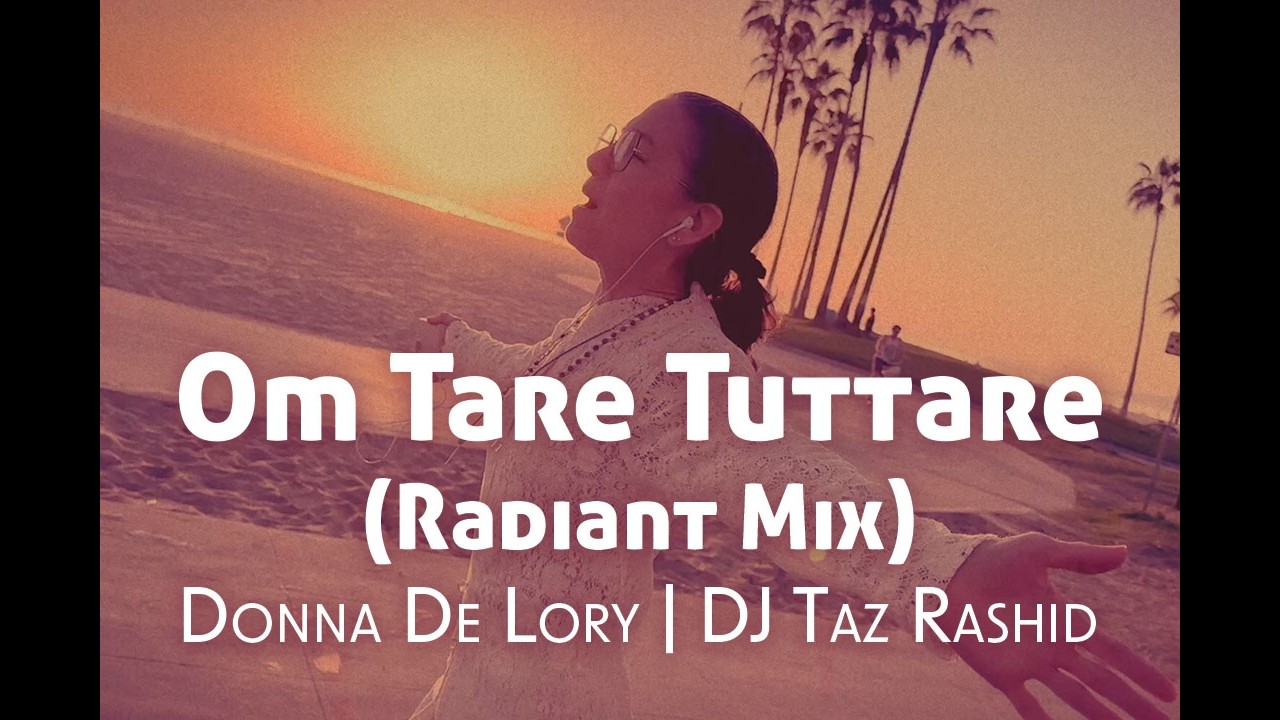
Om Tare Tuttare Mantra: DJ Taz Rashid's Radiant Remix
Featured

Om Tare Tuttare Mantra: DJ Taz Rashid's Radiant Remix

DJ Taz Rashid remixes the sacred "Om Tare Tuttare" mantra into a contemporary groove that centers spiritual practice within everyday urban l…

1 min read
Om Namah Shivaya & Thy Will Be Done: Sacred Mantra Meditation
Featured

Om Namah Shivaya & Thy Will Be Done: Sacred Mantra Meditation

A meditation mix blending the Sanskrit mantra Om Namah Shivaya with the Christian invocation Thy Will Be Done, featuring kirtan artist Donna…

1 min read
How Sitting Still Proves You're Already Awakening
Featured

How Sitting Still Proves You're Already Awakening

Most people can't sit quietly without discomfort, but if you can, you're already further along spiritually than you realize. Eckhart Tolle e…

1 min read
The Missing Piece: How Real Thinking Creates Real Results
Featured

The Missing Piece: How Real Thinking Creates Real Results

Most vision boards fail because people skip the actual thinking. Eckhart Tolle reveals the rhythm that unlocks insight and the two distinct …

1 min read

Weiter erkunden

Setze deinen Weg fort

Mehr Weisheit und Zusammenkünfte aus dem BrightStar-Verzeichnis.

Mehr Artikel

Durchstöbere die ganze Bibliothek an Lehren, Interviews und Leitfäden.

Zu allen Artikeln →

Lehrer & Künstler

Entdecke die Linien, Musiker und Wegbegleiter der bewussten Welt.

Künstler erkunden →

Event finden

Kirtan, Retreats, Klangbäder, Atemarbeit, Festivals — bald in deiner Nähe.

Events ansehen →