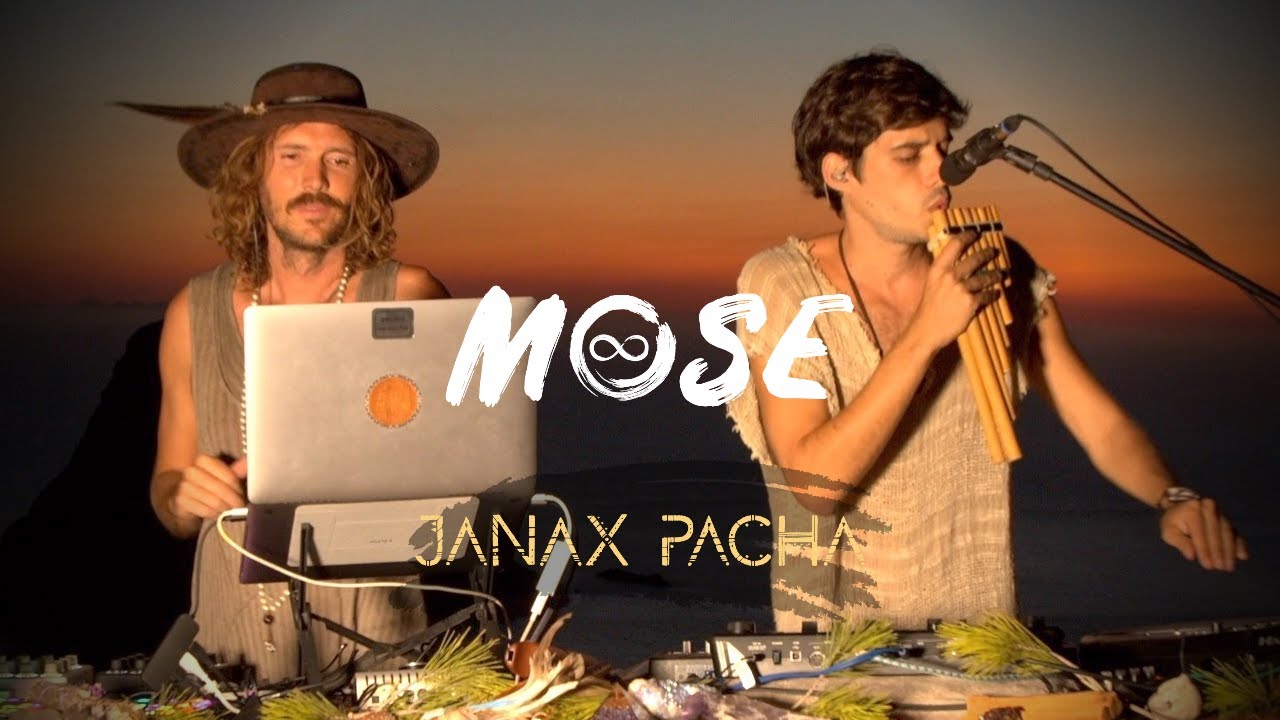
Mose's live "Balance" set is a 92-minute world bass electronic music performance recorded at Cosmic Convergence 2017–18 in Guatemala that explores the integration of masculine and feminine energies through unreleased collaborative tracks. The set uses sonic and compositional choices to create moments of deep energetic connection, guided by tarot philosophy—specifically the Lovers card—which represents harmony between analytical and intuitive minds, logic and emotion. Rather than a purely instrumental mix, this is a ritual of energetic alchemy designed to help dancers access internal balance through sound and movement.
What does it mean to balance masculine and feminine energy?
In Mose's artistic vision, masculine and feminine balance is not about gender but about opposing forces within human consciousness itself. The Lovers card from the Rider-Waite tarot deck—which serves as the visual anchor for this set's artwork—depicts this balance as "a love affair of the intellect and the emotions, of the analytical mind with the intuitive mind." Mose describes working with tarot extensively as part of their daily spiritual practice and oracle work, using it to uncover internal mysteries and attune to energies both within and in the surrounding environment.
The masculine principle represents structure, logic, analysis, discernment, and the organizing force. The feminine principle represents receptivity, emotion, intuition, flow, and the dissolving force. Most humans operate out of balance—overweighting one or the other depending on conditioning, culture, and temperament. Mose's intention with this set was to create sonic conditions where dancers could experience both simultaneously, not as separate poles but as a unified dance.
This is why Mose reported that many attendees felt something unique: "Many people came to me after this set and said they felt this balance of the masculine and feminine that was a powerful and unique experience for them." The set was intentionally composed to move between states—building and releasing, grounding and elevating, driving forward and allowing surrender.
How does electronic music express masculine and feminine energies?
Mose uses several compositional and sonic strategies to encode this balance into the music itself. The set includes tracks with vocal elements—particularly themes of prophecy, voice-raising, and clarity—which carry the feminine principle of expression and emotion. These are layered with the masculine principle of the beat: the driving, consistent pulse of world bass production that provides structure, grounding, and forward momentum.
The set list reveals this interplay: "Prophecy" (Mose and Nalini), "Raise Your Voice" (Mose and Suyana), and "Clarity" (Mose feat. Darren Austin Hall) are all vocal-forward pieces that invite expression and emotional transmission. These alternate with more instrumental, rhythmically dense tracks like "Cuñac" (Raio, Mose Remix) and "Icaro"—which work with indigenous sonic traditions—creating a pendulum between outer expression and inner cultivation.
Mose also notes an experience of deep personal transformation during the set: "There were times during the set where I connected so deeply with the feminine that I almost felt as if I were transformed into a woman. This was a very powerful journey for me." This speaks to the depth of embodied practice Mose brought to the performance—not performing a concept intellectually, but moving through actual energetic states and transmitting them through the music and presence.
What role does the tarot's Lovers card play in this music?
The Lovers card is rarely about romantic love, despite its common misinterpretation. In tarot tradition, it represents alignment, integration, and the choice to unite opposites into a higher whole. The card imagery—often depicting two figures in harmony with a larger force (the Sun, an Angel) above—suggests that this integration is not just personal but cosmic or transpersonal.
Mose explicitly frames the Lovers card as representing "a harmony, a balance between the masculine and feminine aspects of the individual." The artwork for the set is described as "a stylization of the Lovers card out of the Rider-Waite tarot deck." By anchoring the set in this symbol, Mose signals that this is not merely entertainment or dance music—it is ceremonial music with a specific intention: to help listeners arrive at "a greater internal balance and a deeper harmony with our environment."
This is significant because it positions the dance floor as a space of inner work, not escape. Dancers are invited into a state of self-inquiry and embodied knowing, where the music becomes a mirror or oracle, revealing internal patterns and possibilities. Mose's daily oracle practice with tarot—using the cards to connect with energies "present within myself and in my environment"—suggests that the music is crafted from a place of genuine divination, not just production technique.
What is world bass and why is it suited to this work?
World bass is a genre that fuses electronic production techniques with sounds, instruments, and rhythmic traditions from non-Western cultures—in this case, Latin American, indigenous, and global source material. The set was recorded at Cosmic Convergence on Lake Atitlan in Guatemala, where Mose lives, meaning it emerges from proximity to these traditions, not appropriation or extraction.
Tracks like "Icaro" reference the icaros—healing songs from Amazonian plant medicine traditions—while "Cuñac" draws on Quechua or Aymara cultural material. "Raise Your Voice," "Prophecy," and "Dejame Caer" (Let Me Fall) suggest themes of spiritual calling, vision, and surrender that resonate across indigenous cosmologies and contemporary spiritual practice.
World bass as a framework allows Mose to hold both the ancient and the electronic, both the rooted and the future-facing, both the earthly and the cosmic. This is itself a balance of masculine (technology, structure, newness) and feminine (tradition, earth, ancestral knowing). The genre creates permission to use both without hierarchy.
How does the set flow as a journey?
The set list reveals an intentional arc: it begins with "Dejame Caer" (Let Me Fall), inviting surrender and opening. This is followed by "Learning" and "Prophecy"—moving from reception to vision. "Raise Your Voice" and "Cuñac" bring activation and embodied power. The middle section shifts to inner cultivation with "Icaro" and the "Ecstatic Grounding" remix, which juxtaposes bliss states (ecstatic) with groundedness (grounding)—a direct mirror of masculine-feminine balance in the body.
The closer, "Clarity ft. Darren Austin Hall," suggests arrival at a state of clear seeing and articulation. This is not climax in the conventional sense but rather clarification—the nervous system integrated enough to perceive with precision.
Throughout, Mose is curating not just a sequence of songs but a somatic and energetic progression. The "continuous mix" format allows transitions to be fluid, encouraging dancers to stay in an altered or meditative state rather than snapping back to ordinary consciousness between tracks. This extended duration—92 minutes—is long enough for genuine neurological and energetic shifts to occur.
What makes this performance distinctive?
This is a recording of a live, in-person set with a dance floor of "open minded beautiful people from around the world," as Mose describes them. The applause and presence of the crowd are audible throughout the recording, grounding this in real community ritual rather than studio perfection. The feedback Mose received—people reporting experiences of energetic balance—suggests the work succeeded at a level beyond technical skill: it created a field where transformation became possible.
The set also features collaborative, unreleased material developed with other artists (Nalini, Suyana, Jackson Lewis, Liquid Bloom, Raio, Darren Austin Hall). This is not Mose as solo producer but Mose as curator and channel, working in partnership with other musicians and vocalists to weave a larger tapestry. The presence of multiple voices and contributions adds textural and energetic richness, preventing any single aesthetic from dominating.
Most distinctively, Mose makes no apology for the spiritual intention behind the work. In an era where electronic music often distances itself from explicit meaning-making or ritual framing, Mose positions this set squarely in the territory of consciousness work, oracle practice, and energetic alchemy. The music is not meant to escape life; it is meant to deepen one's relationship to the mysteries of life.
Where to go from here
If this set resonates, explore the unmixed versions of these tracks on Mose's Spotify playlist to hear the individual compositions. Engage with the Rider-Waite tarot deck—particularly the Lovers card—to deepen your understanding of the symbolism anchoring this work. Consider what "balance" means in your own life: Which pole (masculine logic or feminine intuition) do you habitually favor? How might you create more permission for the opposite within yourself? Finally, use dance and movement as a practice for accessing these energies in your own body, rather than waiting for external music to grant access.