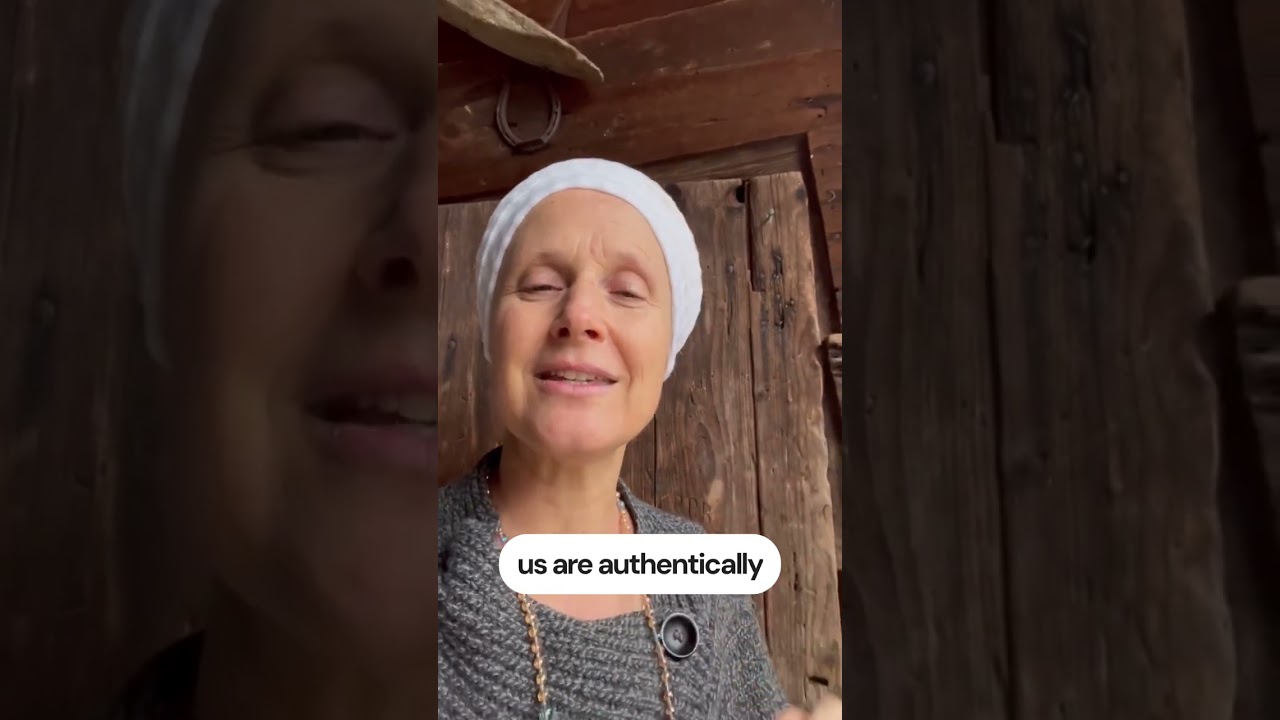
TLDR: Snatam Kaur's kirtan "I Am," performed live in Bucharest in 2022, is a sonic invitation to remember the infinite nature of the Self—a place of inherent strength, resilience, and peace beyond the fluctuations of ordinary mind and circumstance. Through repetition of this fundamental affirmation in a call-and-response format, the song functions as a tuning mechanism, helping practitioners reset their inner state and reconnect with what Kaur describes as the inexhaustible resource of their own being. The live concert format amplifies this effect through collective participation, creating a healing field that Kaur identifies as one of the most precious dimensions of sacred music work.
What Does "I Am" Mean in the Context of Kirtan and Spiritual Practice?
The phrase "I Am" carries profound significance in contemplative and devotional traditions. It points to the ground of being itself—that aspect of consciousness which exists prior to thought, identity, or circumstance. In Snatam Kaur's framing, singing "I Am" is not an act of ego affirmation but rather a tuning back into what she calls "the infinite nature of the Self." This is distinct from the personal self with its anxieties, stories, and limitations.
When Kaur speaks of the song reminding listeners to "tune back into the infinite nature of the Self," she is invoking a teaching common to Kundalini Yoga and Sikh philosophy—that the individual consciousness is ultimately inseparable from universal consciousness, and that remembering this truth is itself a healing act. The repetition of "I Am" in kirtan works like a frequency adjustment, much as tuning a radio dial brings a station into focus. Rather than merely thinking about the infinite Self, the practitioner sings into direct experience of it.
How Does Repetitive Chanting Create States of Inner Stability?
Kirtan operates through the principle of mantra—sound formulas designed to shift consciousness when chanted repeatedly. The simplicity of "I Am" is deceptive; this two-word phrase, when sung over extended periods with full attention, becomes a container for profound psychological and spiritual work. The repetition creates several effects simultaneously:
- Mental settling: The repetitive melody anchors attention, quieting the habitual chatter of the discursive mind. Rather than fighting thoughts, the kirtan practitioner gives the mind something specific and beautiful to do.
- Frequency entrainment: The sustained tones and rhythm of kirtan, especially in a live setting with multiple voices, begin to synchronize the nervous system. Listeners and singers alike tend to relax into a state of coherence.
- Identity reset: By repeatedly affirming "I Am" rather than "I am anxious" or "I am insufficient," the practitioner begins to disidentify from transient states and reconnect with what Kaur identifies as the unchanging ground of being.
- Access to resilience: Kaur explicitly notes that this tuning into the infinite Self reveals "incredible strength, resilience, and peace." These are not qualities that must be constructed or earned; they are recognized as already present when the mind stops obscuring them.
Why Is Live Collective Performance More Powerful Than Recorded Kirtan?
While recorded kirtan offers value and accessibility, Snatam Kaur emphasizes that the live concert experience holds a unique potency. She describes the "blessed energy of coming together for our live concert experiences" as "one of the most precious gifts of my life," and attributes to these gatherings "so much joy and healing."
There are several mechanisms at work in collective kirtan that distinguish it from solitary practice or listening:
- Resonance amplification: When multiple voices sing the same phrase, the acoustic field becomes denser and more immersive. Listeners are not just hearing "I Am"—they are surrounded by it, bathed in the frequency.
- Emotional contagion: The genuine presence, devotion, and joy of the performers and other audience members create an affective field. People tend to feel more deeply moved, more connected, and more able to access their own capacity for peace when in a room with others experiencing the same.
- Witness consciousness: The shared act of singing or listening to sacred sound in real time creates a sense of belonging and mutual recognition. Each person is simultaneously a participant and a witness, held in a field of intentionality.
- Dissolution of ordinary time: Live performances can induce a shift in temporal experience; the ordinary sense of time passing dissolves, and the present moment expands. This opening creates the conditions for direct perception rather than intellectual understanding.
Kaur's mention of "amazing and spirited audience participation" on the Bucharest night points to this co-creative dimension: the audience is not passive; their engagement amplifies the effect for everyone, including the performers.
How Does Kirtan Function as a Tool for Tuning or Recalibration?
Kaur's metaphor of "tuning back into" the infinite Self is instructive. The implication is that most people, most of the time, are tuned to a different frequency—the frequency of doubt, fear, identification with small self, preoccupation with lack. This is not a failure or pathology; it is simply the default mode of an unmindful mind.
Kirtan, in this view, is not about becoming something new or acquiring something missing. It is about remembering and retuning to what is already present. The "I Am" phrase acts as the tuning fork. When sung with full presence and feeling, it creates a harmonic alignment with the deeper frequencies of consciousness already operating within the listener and singer.
This tuning process is ongoing, not a one-time achievement. Because the mind habitually drifts back to smaller, more contracted states, the regular practice of kirtan—especially in community—serves as a rhythm of return, a ceremonial way of saying: "Yes, I am more than my fears. Yes, there is an infinite and inexhaustible dimension to my being."
What Role Does Personal Spiritual Experience Play in Kaur's Approach?
Snatam Kaur's teaching is rooted in direct practice and lived experience rather than theoretical spirituality. She speaks of the song as "so special to me" because of what it has shown her—that tuning into the infinite Self reveals strength, resilience, and peace. This is not doctrine she is promulgating; it is knowledge she has verified through her own practice and that she has observed in others.
Her emphasis on the "precious gifts" of live performance, including the "joy and healing" generated, reflects someone who has felt and witnessed these effects firsthand. When she says "I hope you can join us soon in one of these cities," she is extending an invitation not to a performance but to an experience of shared remembering. The specificity of her tour schedule—cities across Europe in early 2025, including festivals and workshops—indicates a commitment to bringing this work directly to people in their own regions.
How Can the Listener Take This Teaching Beyond the Video?
The video is an entry point, but Snatam Kaur's broader work offers multiple pathways for deepening engagement:
- Repeated listening: The song can be returned to again and again, allowing the effects to deepen and stabilize. Many kirtan practitioners report that a melody that seemed simple on first hearing reveals new layers and textures over time.
- Personal singing: Learning and singing "I Am" oneself, rather than only listening passively, activates different parts of the nervous system and consciousness. The vibration of one's own voice creates direct neurological and energetic effects.
- Live attendance: Kaur's tour schedule and online school (Kirtan and Kundalini) provide opportunities to study with her directly and experience the collective field she emphasizes.
- Studio album exploration: "I Am" is part of Kaur's album Heartflow, which contains other songs designed to work with different dimensions of consciousness and emotion. Exploring the full album allows for a richer engagement with her teaching.
- Kundalini Yoga practice: The tradition in which Kaur is rooted emphasizes the integration of kirtan with asana (physical postures), pranayama (breath work), and meditation. These practices together create a comprehensive approach to awakening and stabilizing higher consciousness.
Where to Go From Here
If this teaching resonates, several concrete steps are available. Listen to "I Am" repeatedly over a period of weeks, allowing the phrase and melody to become familiar. If moved to do so, sing along with the video or the studio recording. Explore Snatam Kaur's Heartflow album and other works. Visit her online school at kirtan-and-kundalini.com to deepen your understanding of the tradition from which this music arises. And if you live in or can travel to one of the cities on her 2025 Heartflow Tour, consider attending a live event. The experience of sitting in a room with Snatam Kaur, a live band, and others gathered with similar intention cannot be replicated through screens. As Kaur herself testifies, the "special and blessed energy" of these gatherings is one of life's precious gifts—not an indulgence, but a direct method of remembering who and what we fundamentally are.