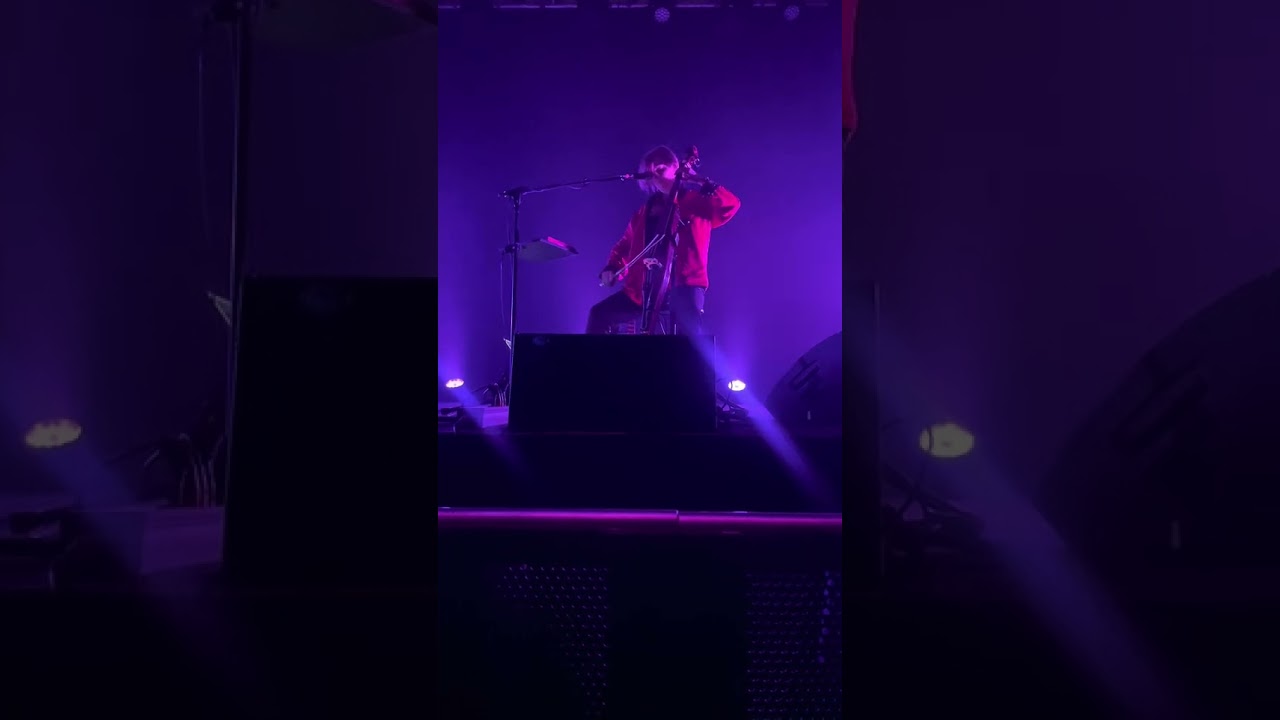
Shannon Hayden presents a live performance of "Night by Dark Water" recorded in Copenhagen, offering a contemplative kirtan experience that combines devotional chanting with ambient, introspective musicality. The piece creates a meditative atmosphere through the use of layered vocals and instrumental accompaniment, inviting listeners into a space of inner reflection and spiritual presence.
What Is Kirtan and How Does It Function as a Contemplative Practice?
Kirtan is a form of call-and-response devotional chanting rooted in Hindu and yogic traditions, though it has evolved into a more universal spiritual practice accessible across cultures and belief systems. Unlike structured religious ritual, kirtan operates as a participatory meditation—a way of directing consciousness inward while simultaneously connecting with others through shared vocalization. The repetition of sacred syllables and phrases works on both neurological and energetic levels, creating coherence in the mind and establishing what practitioners describe as a direct experience of presence.
In Shannon Hayden's "Night by Dark Water," the kirtan format is expanded beyond traditional call-and-response to include atmospheric instrumentation and layered vocal textures. This approach honors the core function of kirtan—which is to remove obstacles to inner awareness—while creating a sonic environment that reflects contemporary sensibilities about what sacred sound can be. The live performance captures this interplay between structure and spontaneity, between the fixed form of the chant and the fluid responsiveness of a musician responding to a specific time, place, and audience.
How Does "Night by Dark Water" Create a Specific Emotional and Spiritual Atmosphere?
The title itself—"Night by Dark Water"—suggests a journey into unknown depths, both literally and metaphorically. Water in spiritual traditions often symbolizes the flow of consciousness, the unconscious mind, or the ocean of being from which all forms arise. Darkness in this context is not foreboding but rather fertile emptiness, the space before manifestation, the womb of possibility. By combining these archetypal images with live performance, Hayden creates a sonic environment that mirrors an internal descent into deeper layers of awareness.
The live recording from Copenhagen anchors this conceptual framework in a real moment and place. A live performance carries an immediacy and spontaneity that studio recordings cannot replicate; there is a genuine vulnerability and presence in how a musician responds to an audience in real time. This liveness is particularly significant in kirtan, where the depth of the experience often depends on the authenticity and presence of the facilitator. The venue, the acoustic environment, the energy of those gathered—all of these become part of the piece itself.
What Role Does Repetition Play in Devotional Music?
Repetition in kirtan serves multiple functions simultaneously. On the surface level, it creates a meditative anchor—a point of focus for the mind that gradually settles deeper layers of thought. As the conscious mind becomes occupied with following and singing a simple phrase, more subtle levels of consciousness become available. This is not suppression but rather a redirection of attention, similar to how a river's water moves around a stone rather than fighting it.
On another level, repetition creates a physiological effect. The rhythm of chanting synchronizes breathing patterns, heart rate, and brainwave activity. When done collectively, as kirtan traditionally is, this synchronization extends across a group, creating a coherent field of awareness. Even in a recorded performance, the listener is invited into this field through the act of listening and following along.
Repetition also serves a psychological function: it works with the mind's natural tendency toward patterns and habits, redirecting that habitual tendency toward contemplative rather than anxious or compulsive loops. Instead of ruminating on fears or desires, the repetitive mantra gives the mind something sacred to hold onto, something that by definition points beyond personal preoccupations toward a larger universal dimension.
Why Does Live Performance Matter in Spiritual Music?
There is a qualitative difference between a recorded kirtan and a live one. A live performance involves genuine human presence—vulnerability, risk, and the capacity to respond in the moment. The musician does not know exactly how the evening will unfold, what energy the audience brings, or how their voice will respond to the acoustic space. This unpredictability is not a limitation but an essential feature of the practice.
When Shannon Hayden performed "Night by Dark Water" in Copenhagen, she was meeting that specific moment, that specific audience, that specific room with her full presence. This cannot be manufactured or perfected in advance; it can only be lived. For listeners, either present in the room or hearing the recording, there is a transmission that happens through authentic presence that differs from a polished studio production. The listener can sense whether the performer is truly present or merely executing a piece.
This is why many spiritual traditions emphasize the importance of the teacher or guide—not as a source of information (which can be transmitted through text or recording) but as a living presence that models what it means to be awake, aware, and responsive in the moment. Kirtan functions similarly; it is not primarily about learning lyrics or melodies but about resonating with the presence of someone moving through a devotional state.
How Does Contemporary Kirtan Differ from Traditional Forms?
Traditional kirtan, as practiced in Hindu temples and yoga ashrams, follows more standardized patterns: a lead vocalist chants a line, the congregation responds, instrumental musicians maintain rhythm and melody. The content is often drawn from classical chants and mantras with centuries of history behind them. Shannon Hayden's "Night by Dark Water" represents an evolution of this form—one that honors the essential function of kirtan while expanding its musical language.
Contemporary kirtan artists like Hayden often incorporate original compositions alongside traditional material, blend multiple musical traditions, and create atmospheric soundscapes that support the inward journey. The instrumentation may include modern ambient elements alongside traditional instruments. The vocal approach might be less about congregational participation and more about creating a shared listening experience, where the audience's presence and attention are the primary forms of participation.
This evolution is not a dilution of kirtan but rather its adaptation to contemporary contexts. The core principle remains: using the repetition and vibrational quality of the voice to move consciousness beyond thought, beyond personal identity, into a space of presence and connection. How that is accomplished—whether through a temple full of devotees or a concert hall in Copenhagen—is secondary to whether the function actually occurs.
What Is the Role of Recorded Performance in Spiritual Practice?
A recorded kirtan performance occupies an interesting position: it is not a live event but neither is it merely a product. When you listen to "Night by Dark Water," you are hearing a specific moment in time, captured and preserved. The performer's presence in that moment was real, even though you are hearing it mediated through technology and time.
For practitioners of meditation and contemplative spirituality, recorded kirtan can serve as an accompaniment to personal practice. Listening to Shannon Hayden's performance might support your own meditation, provide a container for reflection, or simply offer a respite from the frantic pace of ordinary life. The recording allows the work to reach people in different geographic locations, different time zones, and different circumstances than a live performance could accommodate.
There is also value in the document itself—in knowing that this specific moment occurred, that this transmission happened. Recordings preserve something essential about a particular artist's approach and presence during a particular period of their practice. They become part of the artistic and spiritual record, available for future listeners to encounter.
Where to go from here
If you are drawn to Shannon Hayden's work on "Night by Dark Water," consider listening with intention rather than as background music. Find a quiet space, sit comfortably, and allow yourself to be carried by the sound. Notice whether you naturally align your breathing with the rhythm, whether particular phrases or tones resonate with something in your own being. Some listeners find that following along with words, if they are available, deepens the experience, while others prefer to focus purely on the vocal and instrumental tones.
Explore other contemporary kirtan artists to understand the range of approaches within this evolving tradition. Listen to both traditional kirtan recordings and modern interpretations to sense what elements feel essential to the practice and which ones adapt naturally to different contexts. If the experience resonates, consider attending a live kirtan performance or exploring other works by Shannon Hayden to understand her particular approach and artistry.