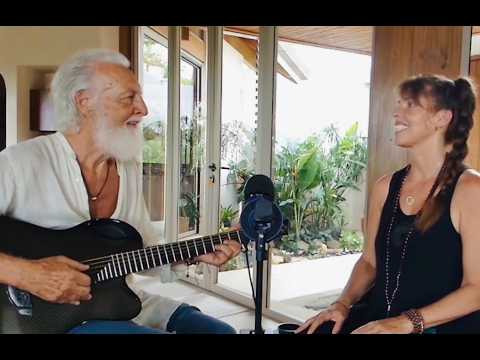
This video presents a live concert performance featuring Deva Premal and Miten, two accomplished kirtan artists and spiritual musicians, alongside special guest Manose. The footage comes from their In Concert CD/DVD combo release and captures the performance of "Awakening" and "Om Shanti," demonstrating the collaborative interplay between vocalists and instrumentalists in contemporary devotional music practice.
What Is Kirtan and How Does It Function as a Spiritual Practice?
Kirtan is a form of call-and-response chanting rooted in Hindu and Bhakti traditions, where a lead singer or group of musicians invite participants into rhythmic, repetitive vocal engagement with sacred mantras and devotional songs. Unlike passive listening, kirtan creates an interactive space where both performers and audience members engage in collective vocalization. The practice is built on the premise that sustained chanting of sacred names and affirmations can produce shifts in consciousness and emotional opening.
Deva Premal and Miten have become prominent contemporary practitioners of this form, adapting kirtan for modern Western audiences while maintaining its traditional roots. Their approach bridges East and West, making devotional practice accessible to those unfamiliar with Sanskrit or traditional Hindu contexts. The incorporation of live musicians like Manose—who often plays the sarangi or other stringed instruments—adds instrumental texture that supports and deepens the meditative quality of the chanting.
How Do "Awakening" and "Om Shanti" Function as Kirtan Songs?
The titles "Awakening" and "Om Shanti" signal the spiritual intention embedded in these particular pieces. "Awakening" points toward the yogic and Vedantic concept of spiritual consciousness rising or becoming conscious of its true nature—a central theme in non-dualistic Hindu philosophy. "Om Shanti," composed of two sacred Sanskrit syllables, translates approximately as "the primordial sound and peace." The repetition of "Om"—considered the fundamental vibration underlying all existence in Vedanta—combined with "Shanti" (peace) creates a mantra designed to settle the mind toward tranquility and transcendence.
In kirtan performance, these songs function as vehicles for collective consciousness-shifting. The repetition, when performed live with skilled musicians responding to the energy of the room, can produce what participants describe as states of meditation, emotional release, or spiritual opening. The interplay between the lead singers and the instrumental accompaniment—the breathing, the pacing, the dynamic rises and falls—becomes as important as the words themselves.
Why Do Deva Premal and Miten Perform Kirtan on the Concert Stage?
While kirtan traditionally occurred in temples and ashrams as community spiritual practice, contemporary artists like Deva Premal and Miten have brought it to concert venues and recording formats. This shift reflects several developments: growing Western interest in Eastern spirituality and meditation, the rise of world music as a respected genre, and a recognition that devotional practice can exist alongside professional musicianship. Deva Premal's training as a classical musician and her collaboration with Miten—a trained musician with decades of experience in both Western and Eastern musical traditions—demonstrates that kirtan can be performed with studio-level production values and concert-stage professionalism.
The decision to release this performance as both a CD and DVD further emphasizes the multimedia, modern presentation of ancient practice. By making the visual and auditory experience available as a commercial product, artists make kirtan accessible to people who may never attend a live concert or visit a spiritual center. This democratization of devotional music has both advantages (wider reach, lower barriers to entry) and philosophical questions (the role of commerce in spiritual practice).
What Role Does the Special Guest Musician Contribute?
The presence of Manose as a special guest suggests a collaborative vision of kirtan performance. In contemporary world music contexts, special guests often bring additional instrumental color, different musical expertise, or a sense of occasion. Manose's participation likely adds rhythmic complexity, melodic counterpoint, or harmonic depth to the vocal-led kirtan format. The inclusion of guest musicians reflects how modern kirtan has evolved from a purely vocal practice to an ensemble art form where different instruments and players create layers of sound designed to support meditative or devotional states in listeners.
How Does Live Performance Differ From Recorded Kirtan?
The inclusion of "pictures from their adventures on the road" in this release underscores the live performance context. Recorded kirtan captures a specific moment in time—the particular energy, breath, and spontaneous choices the musicians make during one performance. Deva Premal and Miten's live presentations typically feature longer performances, deeper immersion in repetition, and direct interaction with the audience energy than studio recordings allow. The documentary elements (photos from touring) humanize the performers, showing them as traveling practitioners rather than disembodied voices.
For listeners engaging with this recorded concert, the experience bridges live and recorded realms: you receive the authenticity and presence of a live performance while maintaining the production quality and repeatability of a commercial recording.
Where to Go From Here
If you resonate with this performance, consider exploring Deva Premal and Miten's other releases and live events. Their Gayatri Sangha App offers access to recordings, teachings, and community. Attending a live kirtan session—whether with these artists or local facilitators—provides direct experience of the participatory, collective aspect that recorded versions cannot fully convey. Learning basic Sanskrit pronunciation and meanings of key mantras will deepen your engagement with the practice. For those interested in the philosophical foundations, exploring Advaita Vedanta texts that discuss "Om" and meditation will contextualize why these particular sounds carry significance in spiritual practice.