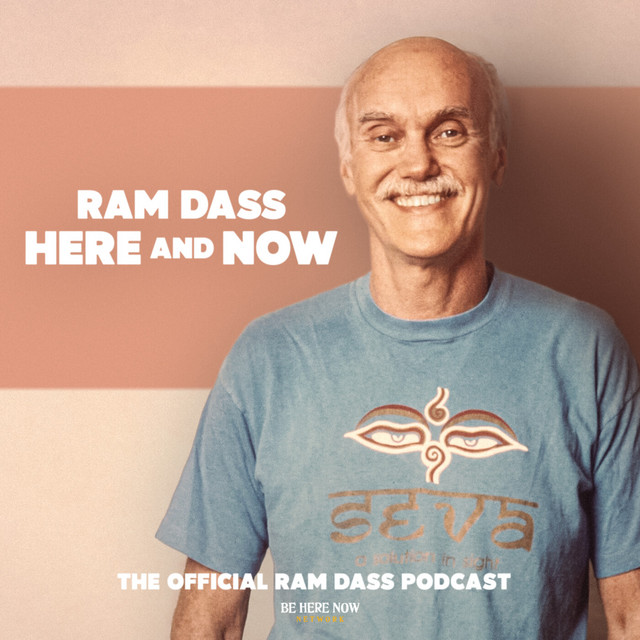
Ram Dass addresses a seeming paradox in engagement with music—the difference between intellectual appreciation and genuine heart-centered listening. The talk invites listeners to examine whether their relationship with music is rooted in presence, love, and authentic care, or filtered through conceptual judgment and performance expectation.
What Does It Mean to Really Care for Music?
Ram Dass opens with a direct provocation: "You don't really care for music, do you, Rudy?" This line, drawn from Leonard Cohen's "Suzanne," is more than wordplay. It points to a fundamental distinction between surface-level engagement with music and genuine heart-centered listening. In the spiritual framework Ram Dass works within, "caring" means something different from passive consumption or technical appreciation. To truly care for music is to meet it with presence, with the whole self—not just the thinking mind evaluating performance, production, or skill.
The question itself invites self-examination: How much of our relationship with music is about the music itself, and how much is about our thoughts about the music? Are we listening to what is, or are we listening through a filter of judgment, comparison, and narrative? This distinction is central to contemplative practice. In the Bhakti tradition that deeply influenced Ram Dass's teaching, music—especially kirtan and devotional song—is understood as a direct pathway to the heart, to presence, to love. But that pathway is only open when we show up without the armor of judgment.
The Trap of the Thinking Mind in Listening
One of the core teachings implicit in this question is the recognition that the conceptual mind can actually block genuine appreciation. When we listen to music through analysis—"Is the singer in tune? Is the production quality high? Does this match my taste?"—we create distance between ourselves and the music. We become critics rather than participants. The mind is busy categorizing, comparing, and deciding whether this experience meets its standards.
This is particularly relevant in modern listening culture, where access to every recording ever made has made us into comparative listeners. We measure one performance against another, one artist against a playlist algorithm's suggestion. This comparative mind is useful in some contexts, but in the realm of music as a spiritual practice or as a vehicle for presence, it becomes an obstacle.
Ram Dass, drawing from decades of practice with kirtan and devotional music, understood that the heart hears differently than the mind evaluates. The heart doesn't care if the voice cracks, if the rhythm isn't perfect, if the production is humble. The heart responds to intention, to vulnerability, to genuine offering. This is why a simple folk song sung with love can touch us more deeply than a technically perfect but emotionally distant performance.
Care as a Spiritual Practice
In Ram Dass's teaching, "care" itself is a spiritual practice. To care genuinely is to turn toward something with full attention, with compassion, with the willingness to be affected by it. This is the opposite of consumption, which involves taking something into ourselves to fill a need or pass the time. When we care for music, we are not using it; we are entering into relationship with it.
This reframing has profound implications. If you care for music, you show up for it. You create conditions for genuine listening—not while multitasking, not while scrolling, not while evaluating. You sit with it. You let it move you. You allow it to reveal what it wants to reveal. This requires vulnerability, because music can access parts of us that the thinking mind keeps guarded. A song can crack open the chest, bring tears, evoke longing, or settle us into unexpected peace.
In the Hindu and Buddhist traditions that shaped Ram Dass's path, this kind of care extends to all of life—caring for the moment, for the person in front of us, for the breath we're taking. Music becomes a training ground for this larger practice of presence. When we learn to truly care for a song, to listen without judgment, we're developing a capacity that transforms how we meet everything.
Presence as the Ground of Real Listening
Underlying the question "Do you really care for music?" is an even deeper one: Are you present? Because presence and care are inseparable. You cannot care for something while your attention is fragmented. You cannot care while you're thinking about something else. Presence is the gift that music asks from us, and it's also what music gives back when we're willing to receive it.
This is especially true of live music, of kirtan, of the kinds of experiences Ram Dass centered in his teaching. In a kirtan—a call-and-response devotional singing practice—the distinction between listener and performer dissolves. Everyone is singing, everyone is listening, everyone is present together. There is no room for the comparing mind; you're too busy breathing, singing, being together. This is perhaps the purest form of caring for music: when it becomes a container for collective presence and love.
Even in solitary listening, the same possibility exists. A song can become a meditation. The voice, the instruments, the silence between notes—all of it becomes an object of attention, a way of resting the mind in the present moment. This is why traditional practices often used music as a gateway to meditation, to prayer, to presence itself.
Where to Go From Here
The invitation in Ram Dass's provocation is to examine your own listening. The next time you encounter music—whether it's a formal concert, a song on your playlist, a friend playing guitar, or a sacred chant—notice the quality of your attention. Are you thinking about the music, or are you present to it? Are you judging it, or are you open to it? Can you let go of whether it "should" be different and meet it as it actually is?
Consider setting aside time for music not as background, but as a primary practice. Sit with a song the way you might sit with a meditation. Notice what happens when you stop evaluating and start caring—when you turn your full heart toward the sound, the silence, the intention behind the music. This is not about becoming a better listener in a technical sense. It's about reclaiming music as a path to presence, to love, to the heart. That is what it means to truly care.