EveryEvent Rome

Parcourir tous les Events

Find every event in Rome

events

Concerts & Live Music
Festivals
Sports & Recreation
Food & Drink
Arts & Culture
Community
Family & Kids
Nightlife
Comedy
Theater
Destinations populaires
BaliSedonaLos AngelesCosta RicaNew YorkSan FranciscoAustinMiamiJoshua TreeTulum
Voir toutes les catégoriesVoir toutes les destinations

Explorer toutes les fonctionnalités

Des outils puissants pour développer tes événements

Fonctionnalités de la plateforme

Tarification dynamique intelligente
Catégories de billets
Places assignées
Récupération des paniers abandonnés
Récupération des visiteurs
Dons & Prix variables
Système d'affiliation
Scanner de billets
Codes promo
Questions personnalisées
Partage de billets
Ventes additionnelles & Options
Analyses & Rapports
Séquences d'emails
Liste d'attente / Notifier / Rappeler
Explorer
Discovery HubArtists & PerformersVenuesKnowledge Base
Voir toutes les fonctionnalitésÀ propos
TarifsBlog
Language
Saved events
Parcourir tous les événements

events

Concerts & Live MusicFestivalsSports & RecreationFood & DrinkArts & CultureCommunityFamily & KidsNightlife

Destinations populaires

BaliSedonaLos AngelesCosta RicaNew YorkSan Francisco

Explorer

Discovery HubArtists & PerformersVenuesKnowledge Base

Fonctionnalités de la plateforme

Tarification dynamique intelligenteCatégories de billetsPlaces assignéesRécupération des paniers abandonnésRécupération des visiteursDons & Prix variablesSystème d'affiliationScanner de billetsCodes promoQuestions personnaliséesPartage de billetsVentes additionnelles & OptionsAnalyses & RapportsSéquences d'emailsListe d'attente / Notifier / Rappeler
Voir toutes les fonctionnalitésÀ propos
TarifsBlog
ConnexionS'inscrireOrganisateurs d'événements
  • Browse All Events
  • Concerts & Live Music
  • Festivals
  • Sports & Recreation
  • Food & Drink
  • Arts & Culture
  • Community
  • Family & Kids
  • Nightlife
  • Toutes les catégories →
  • All Destinations →
  • For Promoters
  • For Artists
  • For Venues
  • For Festivals
  • For Event Spaces
  • For Nonprofits
  • For Bloggers
  • For Speakers
  • Brand Ambassador
  • Case Studies
  • Réseau de 350K+ acheteurs
  • Récupération des paniers abandonnés
  • Tarification dynamique intelligente
  • Catégories de billets
  • Événements récurrents
  • Places assignées
  • Système d'affiliation
  • Liste d'attente / Notifier
  • Scanner de billets
  • Widget intégrable
  • Diffusion d'événements
  • Messagerie
  • Intégrations
  • Rapports
  • Toutes les fonctionnalités →
  • À propos
  • L'écosystème
  • Blog
  • Glossaire
  • Inspiration
  • Centre d'aide
  • Contact
  • Documentation API
  • Ressources de marque
  • Carrières
  • Presse
  • Conditions d'utilisation
  • Politique de confidentialité

Events

  • Browse All Events
  • Concerts & Live Music
  • Festivals
  • Sports & Recreation
  • Food & Drink
  • Arts & Culture
  • Community
  • Family & Kids
  • Nightlife
  • Toutes les catégories →

Getaways

  • All Destinations →

For Organizers

  • For Promoters
  • For Artists
  • For Venues
  • For Festivals
  • For Event Spaces
  • For Nonprofits
  • For Bloggers
  • For Speakers
  • Brand Ambassador
  • Case Studies

Fonctionnalités

  • Réseau de 350K+ acheteurs
  • Récupération des paniers abandonnés
  • Tarification dynamique intelligente
  • Catégories de billets
  • Événements récurrents
  • Places assignées
  • Système d'affiliation
  • Liste d'attente / Notifier
  • Scanner de billets
  • Widget intégrable
  • Diffusion d'événements
  • Messagerie
  • Intégrations
  • Rapports
  • Toutes les fonctionnalités →

Entreprise

  • À propos
  • L'écosystème
  • Blog
  • Glossaire
  • Inspiration
  • Centre d'aide
  • Contact
  • Documentation API
  • Ressources de marque
  • Carrières
  • Presse
  • Conditions d'utilisation
  • Politique de confidentialité
EveryEvent
© 2026 EveryEvent Rome. Tous droits réservés.
Inspiration

Akal Mahakal: A Kirtan for ReleasingFear and Embracing the Eternal Soul

Mirabai Ceiba
Mirabai Ceiba
Feb 12, 2020
6 min de lecture

Akal Mahakal is a Sanskrit chant phrase meaning "Undying, Great Death" that functions as a life-giving mantra designed to dissolve fear by realigning consciousness with the eternal, unchanging nature of the soul. Rather than dwelling on mortality as something to avoid, the chant invites practitioners to recognize that what dies is only the temporary physical form, while the core of being—the soul—exists beyond all decay and remains undying. Through repetition in a kirtan (call-and-response devotional singing) context, practitioners experience a relaxation of the nervous system and a shift in awareness from ego-bound survival anxiety to recognition of indestructible consciousness.

Lecture · 7 sections

What Does Akal Mahakal Mean?

Akal Mahakal breaks down into two Sanskrit terms: "Akal," meaning undying, eternal, or beyond time; and "Mahakal," often translated as Great Death or the destructive, transformative aspect of the divine. Together, the phrase holds an apparent paradox: undying + great death. This is not a morbid invocation but rather a spiritual reorientation. In Kundalini Yoga and bhakti traditions, Mahakal is associated with Shiva as the destroyer of illusion and ego, whose power sweeps away false identities and attachments. By chanting Akal Mahakal, the practitioner accepts death not as an ending but as a gate to understanding the eternal.

How Does This Chant Remove Fear?

Fear often arises from the ego's attachment to continuity of the physical body and personal identity. The nervous system remains in a state of vigilance when survival feels threatened. Akal Mahakal works by reframing the ultimate threat—death—as an illusion obscuring a deeper truth: that consciousness itself is indestructible. By chanting the phrase repeatedly, the mind ceases to resist or deny mortality and instead turns toward it as a doorway. This surrender, paradoxically, releases the grip of fear. The rhythm and melody of kirtan—the call-and-response structure where a leader chants and the community echoes—create a somatic experience of cohesion and safety. The group voice becomes an anchor that transcends individual vulnerability. As fear loses its grip, the nervous system naturally downregulates, the mind settles, and awareness shifts inward.

Why Is This Chant Described as Life-Giving?

It may seem contradictory that a chant focused on death and letting go is called life-giving. However, in contemplative traditions, genuine vitality emerges not from clinging to a fragile ego but from alignment with something deathless. When fear no longer consumes the body's energy, that energy becomes available for authentic living, creativity, and connection. The chant does not invite morbidity or depression; instead, it invites a kind of relaxation—a willingness to stop bracing against the inevitable. This relaxation itself is deeply nourishing. Additionally, in Tantric and yogic philosophy, death (Mahakal) is not separate from life; they are inseparable aspects of the same cosmic process. By honoring death through chant, one stops compartmentalizing existence and begins to experience life as a wholeness that includes both arising and dissolving. This wholeness is more alive, not less.

What Is Kirtan and Why Does It Work?

Kirtan is a devotional singing practice in which a leader (often called the chant leader or bhakta) offers a phrase or mantra, and the community repeats it. The call-and-response format is not merely musical; it is a neurobiological and relational event. Repetition of a sacred phrase, especially in a group setting, synchronizes the nervous systems of participants. The rhythmic breathing required for singing activates the parasympathetic nervous system, the body's "rest and digest" mode. The melody, often pentatonic or based on raga (Indian classical music scales), carries specific emotional and energetic qualities. In the case of Akal Mahakal, the chant is typically performed in a steady, grounded tempo that feels both solemn and centering rather than celebratory. This grounds practitioners in the body while simultaneously opening them to transcendence. The group environment adds what neuroscience now calls "co-regulation"—the stabilizing effect of singing with others in a shared intention. No one is alone with their fear; the community holds the space.

How Does Awareness of the Undying Soul Arise Through This Practice?

In yoga philosophy, the atman (soul or true self) is understood as eternal, unchanging, and unborn. The Bhagavad Gita, a foundational text in this tradition, states that the atman can never be destroyed because it has no birth or death—it simply is. The body, personality, and ego are treated as temporary vehicles or costumes that the soul inhabits and eventually leaves behind. Most practitioners spend little time contemplating this truth; the mind is too preoccupied with maintaining the illusion that the person (ego) is the deepest reality. Chanting Akal Mahakal cracks this illusion by bringing the concept of death and the eternal into focus together, without fear or denial. As the chant quiets the thinking mind and opens a spacious awareness, practitioners may directly sense or intuit that something within them is not touched by change. This is not a belief imposed from outside but a recognition that can arise through the stillness created by the practice. Over time and with repeated exposure, this recognition becomes more stable and accessible.

What Role Does the Melody and Rhythm Play?

Kirtan is not folk music performed for entertainment; every melodic and rhythmic element is chosen to support the spiritual aim of the chant. The melody of Akal Mahakal typically sits in a lower register, evoking a sense of grounding and earth-connection rather than soaring transcendence. The rhythm may be moderate or slow, giving the nervous system time to integrate each repetition rather than overwhelming it. This pacing allows the meaning of the words to penetrate the deeper layers of the psyche, not just the intellectual mind. The melody also creates what musicians call "ease of entry"—the chant should be simple enough for anyone to join, regardless of musical training. This inclusivity is spiritually significant; everyone in the room becomes a singer and participant, not an audience watching performers. The vibrational quality of the human voice, especially when hundreds of people chant together, generates a powerful resonance that can be felt in the chest and throughout the nervous system. This is not mystical speculation but measurable in terms of coherence and synchronization.

Where to Go From Here

If you are drawn to Akal Mahakal, consider seeking out live kirtan gatherings or recordings of the chant performed by experienced chant leaders like Mirabai Ceiba. Begin by listening without expectation; let the sound and the group energy speak to you. If you wish to chant along, allow yourself to join in even if you feel uncertain of the melody or pronunciation. The act of participation is more important than perfection. Over weeks and months of exposure, you may notice subtle shifts in your relationship to death, mortality, and identity. Fear may not disappear entirely—fear is a healthy response to genuine danger—but the existential dread that arises from refusing to accept the nature of existence may ease. You may find yourself more present, more awake to the life happening now, precisely because you have made peace with its transience. This is the paradoxical gift of Akal Mahakal: by meditating on Great Death, you become more alive.

Mirabai Ceiba
AuteurMirabai Ceiba

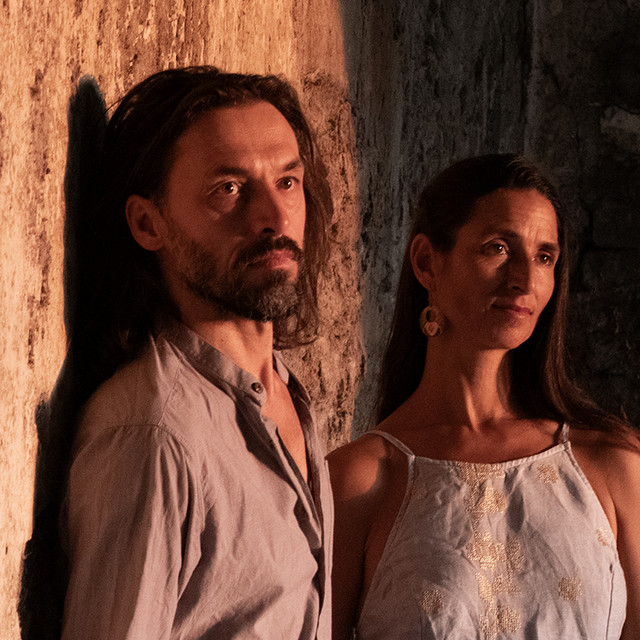
The music of Mirabai Ceiba draws the listener into a gossamer web of gently plucked strings, stately piano arpeggios, subtle vocal interplay and poetic lyricism. The sound is easy…

Voir le profilSite web
Explorer les thèmes
KirtanAkal-mahakalMantra-chantingFear-dissolutionSoul-consciousness

Des questions ?

Questions fréquemment posées

Akal Mahakal translates to "Undying, Great Death." Rather than promoting morbidity, the chant reframes death as a gateway to recognizing the eternal, unchanging nature of the soul. By accepting death through chant, practitioners release the fear-based clinging that prevents them from experiencing genuine aliveness in the present moment.
Kirtan uses repetitive vocalization, rhythmic breathing, and group synchronization to activate the parasympathetic nervous system and downregulate the fight-or-flight response. The call-and-response structure also creates a sense of safety and belonging, while the meditative focus on sacred phrases redirects the mind away from survival anxiety.
According to yogic philosophy, the atman (soul) is eternal and unchanging, but the mind usually remains too absorbed in ego and personality to recognize this. Chanting practices like Akal Mahakal quiet the thinking mind and create a spacious awareness in which direct intuition or recognition of something deathless within you may arise naturally.
While both are contemplative practices, kirtan chanting engages the voice, body, and group field in ways that sitting meditation alone does not. The musicality and repetition of kirtan can be easier for some people to access, and the social element of group singing creates unique neurobiological and relational benefits.
No. Kirtan works on multiple levels: neurobiological (sound and rhythm regulate the nervous system), musical (melody and group singing are universally accessible), and philosophical (the themes of impermanence and inner peace resonate across traditions). You can benefit from the practice without adopting any specific belief system.
Consistent exposure—whether through live kirtan gatherings, recordings, or daily personal practice—tends to produce deeper and more stable shifts in awareness and nervous system regulation. Even a few sessions can produce a calming effect, but sustained practice over weeks and months allows the recognition of the soul's eternal nature to integrate more fully into lived experience.

Continuer la lecture

More from Mirabai

Voir tout
Night Wind: A Sacred Song Born in Finnish Silence
Featured

Night Wind: A Sacred Song Born in Finnish Silence

Mirabai Ceiba's "Night Wind" emerged from a secluded Finnish cabin during the white nights—a meditation on wind, longing, and the songs natu…

1 min read
Lady of the Well: Grief Transformed Into Song and Remembrance
Featured

Lady of the Well: Grief Transformed Into Song and Remembrance

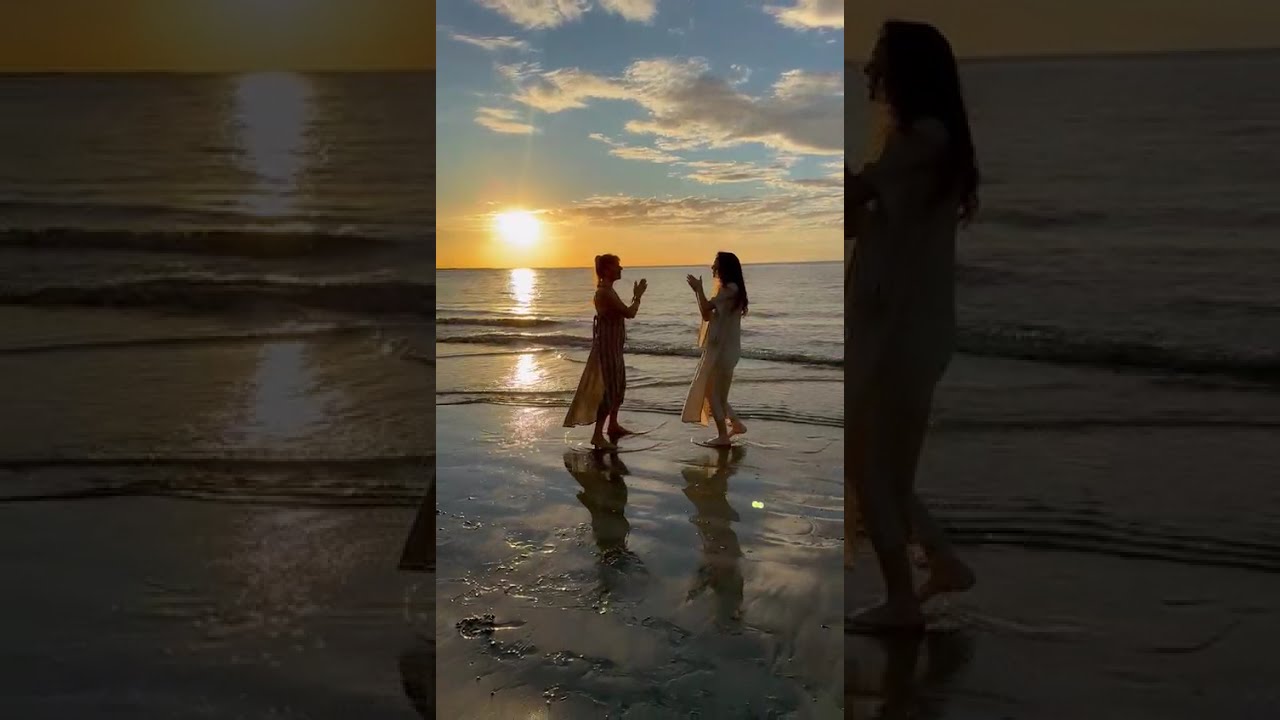
A musical tribute to friendship and loss, where two singers channel grief into transformation, guided by the metaphor of water and wind conn…

1 min read
Yemaya Reimagined: Ocean Goddess Chant Unites Voices
Featured

Yemaya Reimagined: Ocean Goddess Chant Unites Voices

A new duet celebrating the Yoruba ocean goddess brings together two voices in a healing chant born from serendipitous meeting in Costa Rica.…

1 min read
Ocean Goddess Rising: Two Voices Reimagine Yemaya
Featured

Ocean Goddess Rising: Two Voices Reimagine Yemaya

Deva Premal and Ajeet unite in a devotional collaboration honoring Yemaya, the Yoruba ocean goddess, recorded in Costa Rica with arbutar acc…

1 min read

Continue d’explorer

Poursuis ton chemin

Plus de sagesse et de rassemblements dans tout l’annuaire BrightStar.

Plus d’articles

Parcours toute la bibliothèque d’enseignements, d’entretiens et de guides.

Retour à tous les articles →

Enseignants et artistes

Découvre les lignées, les musiciens et les guides du monde conscient.

Explorer les artistes →

Trouver un événement

Kirtan, retraites, bains sonores, breathwork, festivals — bientôt près de chez toi.

Parcourir les événements →