EveryEvent Rome

Parcourir tous les Events

Find every event in Rome

events

Concerts & Live Music
Festivals
Sports & Recreation
Food & Drink
Arts & Culture
Community
Family & Kids
Nightlife
Comedy
Theater
Destinations populaires
BaliSedonaLos AngelesCosta RicaNew YorkSan FranciscoAustinMiamiJoshua TreeTulum
Voir toutes les catégoriesVoir toutes les destinations

Explorer toutes les fonctionnalités

Des outils puissants pour développer tes événements

Fonctionnalités de la plateforme

Tarification dynamique intelligente
Catégories de billets
Places assignées
Récupération des paniers abandonnés
Récupération des visiteurs
Dons & Prix variables
Système d'affiliation
Scanner de billets
Codes promo
Questions personnalisées
Partage de billets
Ventes additionnelles & Options
Analyses & Rapports
Séquences d'emails
Liste d'attente / Notifier / Rappeler
Explorer
Discovery HubArtists & PerformersVenuesKnowledge Base
Voir toutes les fonctionnalitésÀ propos
TarifsBlog
Language
Saved events
Parcourir tous les événements

events

Concerts & Live MusicFestivalsSports & RecreationFood & DrinkArts & CultureCommunityFamily & KidsNightlife

Destinations populaires

BaliSedonaLos AngelesCosta RicaNew YorkSan Francisco

Explorer

Discovery HubArtists & PerformersVenuesKnowledge Base

Fonctionnalités de la plateforme

Tarification dynamique intelligenteCatégories de billetsPlaces assignéesRécupération des paniers abandonnésRécupération des visiteursDons & Prix variablesSystème d'affiliationScanner de billetsCodes promoQuestions personnaliséesPartage de billetsVentes additionnelles & OptionsAnalyses & RapportsSéquences d'emailsListe d'attente / Notifier / Rappeler
Voir toutes les fonctionnalitésÀ propos
TarifsBlog
ConnexionS'inscrireOrganisateurs d'événements
  • Browse All Events
  • Concerts & Live Music
  • Festivals
  • Sports & Recreation
  • Food & Drink
  • Arts & Culture
  • Community
  • Family & Kids
  • Nightlife
  • Toutes les catégories →
  • All Destinations →
  • For Promoters
  • For Artists
  • For Venues
  • For Festivals
  • For Event Spaces
  • For Nonprofits
  • For Bloggers
  • For Speakers
  • Brand Ambassador
  • Case Studies
  • Réseau de 350K+ acheteurs
  • Récupération des paniers abandonnés
  • Tarification dynamique intelligente
  • Catégories de billets
  • Événements récurrents
  • Places assignées
  • Système d'affiliation
  • Liste d'attente / Notifier
  • Scanner de billets
  • Widget intégrable
  • Diffusion d'événements
  • Messagerie
  • Intégrations
  • Rapports
  • Toutes les fonctionnalités →
  • À propos
  • L'écosystème
  • Blog
  • Glossaire
  • Inspiration
  • Centre d'aide
  • Contact
  • Documentation API
  • Ressources de marque
  • Carrières
  • Presse
  • Conditions d'utilisation
  • Politique de confidentialité

Events

  • Browse All Events
  • Concerts & Live Music
  • Festivals
  • Sports & Recreation
  • Food & Drink
  • Arts & Culture
  • Community
  • Family & Kids
  • Nightlife
  • Toutes les catégories →

Getaways

  • All Destinations →

For Organizers

  • For Promoters
  • For Artists
  • For Venues
  • For Festivals
  • For Event Spaces
  • For Nonprofits
  • For Bloggers
  • For Speakers
  • Brand Ambassador
  • Case Studies

Fonctionnalités

  • Réseau de 350K+ acheteurs
  • Récupération des paniers abandonnés
  • Tarification dynamique intelligente
  • Catégories de billets
  • Événements récurrents
  • Places assignées
  • Système d'affiliation
  • Liste d'attente / Notifier
  • Scanner de billets
  • Widget intégrable
  • Diffusion d'événements
  • Messagerie
  • Intégrations
  • Rapports
  • Toutes les fonctionnalités →

Entreprise

  • À propos
  • L'écosystème
  • Blog
  • Glossaire
  • Inspiration
  • Centre d'aide
  • Contact
  • Documentation API
  • Ressources de marque
  • Carrières
  • Presse
  • Conditions d'utilisation
  • Politique de confidentialité
EveryEvent
© 2026 EveryEvent Rome. Tous droits réservés.
Inspiration

Cauliflower Mushroom: The AntifungalEdible Hidden Underground

Paul Stamets
Paul Stamets
Oct 4, 2019
7 min de lecture
À regarder · 4

Sparassis crispa, known as the cauliflower mushroom, is a culinary delicacy that grows several feet below ground from the roots of old-growth trees like Douglas firs. It produces a unique antimicrobial compound called sparassol, which gives it remarkable competitive ability against other fungi like Armillaria mellea (honey mushrooms). Despite the identification of these antifungal metabolites in a landmark 1992 study, the species remains largely unstudied, representing an overlooked opportunity for modern medicine as fungal infections become an increasingly pressing public health concern.

Lecture · 7 sections

What Makes the Cauliflower Mushroom Unique as an Edible?

Sparassis crispa stands apart from other edible mushrooms in both its culinary appeal and its physical form. The specimen Paul Stamets encountered weighed nearly 3 pounds and was clean, young, and free of the soil debris that typically clings to the fungus's intricate, folded structure. This particular fruiting body represented the best specimen Stamets had found that season—a rarity that speaks to how difficult it is to discover these mushrooms in truly pristine condition.

The mushroom's common name derives from its appearance: the fruiting body resembles a head of cauliflower with intricate, crispy lobes that are edible and choice (a mycological term meaning highly desirable). Unlike many edible fungi that fruit at or near the soil surface, Sparassis crispa forms deep underground, developing from the roots of established trees, often descending several feet below ground level. This subterranean origin explains why collectors rarely encounter the mushroom until it has accumulated soil and organic matter in its crevices. Finding a clean specimen is a significant event for both culinary and scientific purposes.

Where Does the Cauliflower Mushroom Grow and How Does It Affect Trees?

Sparassis crispa grows from the root systems of mature trees, particularly old-growth Douglas firs and other conifers. The fungus was long thought to be a parasitic organism targeting tree roots, though contemporary understanding has refined this classification. The mushroom causes what mycologists call "brown rot," a selective form of wood decay in which the fungus digests cellulose—the structural polymer in plant cells—but leaves lignin, the brown compound that gives wood its color and hardness, largely intact. This selective degradation is what gives brown-rotted wood its characteristic appearance: cubical blocks of brittle, brown material that crumbles easily.

This decay pattern can lead to "brown butt rot," a condition where the base and lower trunk of infected trees becomes structurally compromised. While this process can eventually weaken and kill host trees, the long timeline and the fungus's role in nutrient cycling mean it functions as part of the forest ecosystem's natural decomposition system rather than as a rapid pathogen.

What Is Sparassol and How Does It Give This Mushroom Competitive Power?

In 1992, researchers at Oxford University's Department of Plant Sciences conducted a landmark study that identified several antimicrobial metabolites produced by Sparassis crispa. One of these compounds was given the name "sparassol" (methyl-2-hydroxy-4-methoxy-6-methylbenzoate), a molecule that became the centerpiece of understanding how this fungus maintains dominance in competitive mycological environments.

Sparassol functions as a natural antibiotic, allowing Sparassis crispa to suppress and outcompete other fungi in its ecological niche. Paul Stamets conducted an in vitro challenge test pitting Sparassis crispa cultures against Armillaria mellea (honey mushrooms), one of the most aggressive and competitive fungi in North American forests. The results were striking: Sparassis crispa's ability to conquer and out-compete Armillaria mellea in laboratory conditions was "impressive," demonstrating the potency of its antimicrobial arsenal. Few fungi possess the chemical sophistication to hold their own against Armillaria mellea, yet Sparassis crispa does so reliably, suggesting that sparassol and its companion metabolites are exceptionally effective compounds.

Why Has This Antifungal Compound Not Been Developed for Medical Use?

Despite the identification of sparassol and other antifungal metabolites nearly three decades ago, Sparassis crispa has received minimal subsequent research attention. The 1992 Oxford study remains among the only rigorous investigations into the mushroom's medicinal chemistry, a gap that Stamets identifies as a significant oversight given contemporary health challenges.

The landscape of fungal infections has shifted markedly in recent decades. Antibiotic-resistant fungi pose an escalating threat to human health, particularly for immunocompromised patients. Candida auris, Aspergillus fumigatus, and other clinically significant fungi have developed resistance to standard antifungal medications, leaving physicians with diminishing treatment options. In this context, Stamets argues that Sparassis crispa warrants urgent reexamination. A fungus that can outcompete Armillaria mellea in the laboratory—one of nature's most formidable mycological competitors—likely harbors compounds with genuine therapeutic potential. The fact that these compounds remain largely unstudied represents a missed opportunity in pharmaceutical discovery.

How Does Sparassis crispa Compare to Other Medicinal Mushrooms?

While many medicinal mushrooms have been studied extensively for immune-modulating properties (such as reishi, shiitake, and maitake), Sparassis crispa occupies a distinct niche: it is a direct antimicrobial agent, not merely an immune system supporter. This direct antagonism against other fungi makes it fundamentally different from mushrooms whose health benefits work through immune potentiation. The specificity of sparassol's action—its ability to suppress competing fungi without necessarily requiring immune system activation—suggests a different mechanism of action and potentially different applications.

Moreover, Sparassis crispa is accessible as a culinary mushroom, meaning that traditional food uses could harbor therapeutic benefits. Throughout human history, edible plants and fungi have served as informal pharmacies; many modern drugs derive their inspiration from food sources. The fact that Sparassis crispa has been foraged and eaten suggests that indigenous or historical communities may have recognized benefits—antimicrobial, digestive, or otherwise—that modern science has not yet formalized.

What Would Modern Research on This Mushroom Entail?

A comprehensive modern investigation of Sparassis crispa would likely begin where the 1992 Oxford study ended: with isolation and characterization of sparassol and related metabolites. Contemporary analytical chemistry could determine the compound's exact mechanism of action against clinically significant fungi, test its efficacy against resistant strains, and assess its potential toxicity in human systems. In vitro studies could expand on the existing Armillaria mellea challenge test, pitting Sparassis crispa metabolites against a broader array of pathogenic fungi.

Animal studies and eventually human trials would follow, examining whether sparassol or its derivatives could be developed into a therapeutic agent. The mushroom's availability as a cultivated food source could also facilitate large-scale production if research justified clinical development. Unlike rare plants or fungi that are difficult to grow, Sparassis crispa can be cultivated on suitable substrates, potentially making any resulting therapeutic compound economically viable.

Where to go from here

For readers interested in further exploration, Paul Stamets's book Mycelium Running: How Mushrooms Can Help Save the World provides broader context for fungal ecology and potential applications. The original 1992 Oxford study—"Two new antifungal metabolites produced by Sparassis crispa in culture and in decayed trees" by Woodward, Sultan, Barrett, and Pearce in the Journal of General Microbiology—remains the definitive source on the mushroom's antimicrobial chemistry. For those in regions where Sparassis crispa grows (temperate zones with old-growth conifers), foraging guides can help with identification and harvest; remember that these mushrooms fruit deep underground and are often attached to tree roots, so ethical harvesting requires care not to damage the host tree. Finally, anyone interested in fungal medicine should monitor emerging research on fungal resistance and novel antifungal compounds—Sparassis crispa may yet reclaim its place in both culinary and medicinal traditions once modern science gives it the attention the 1992 discovery suggested it deserves.
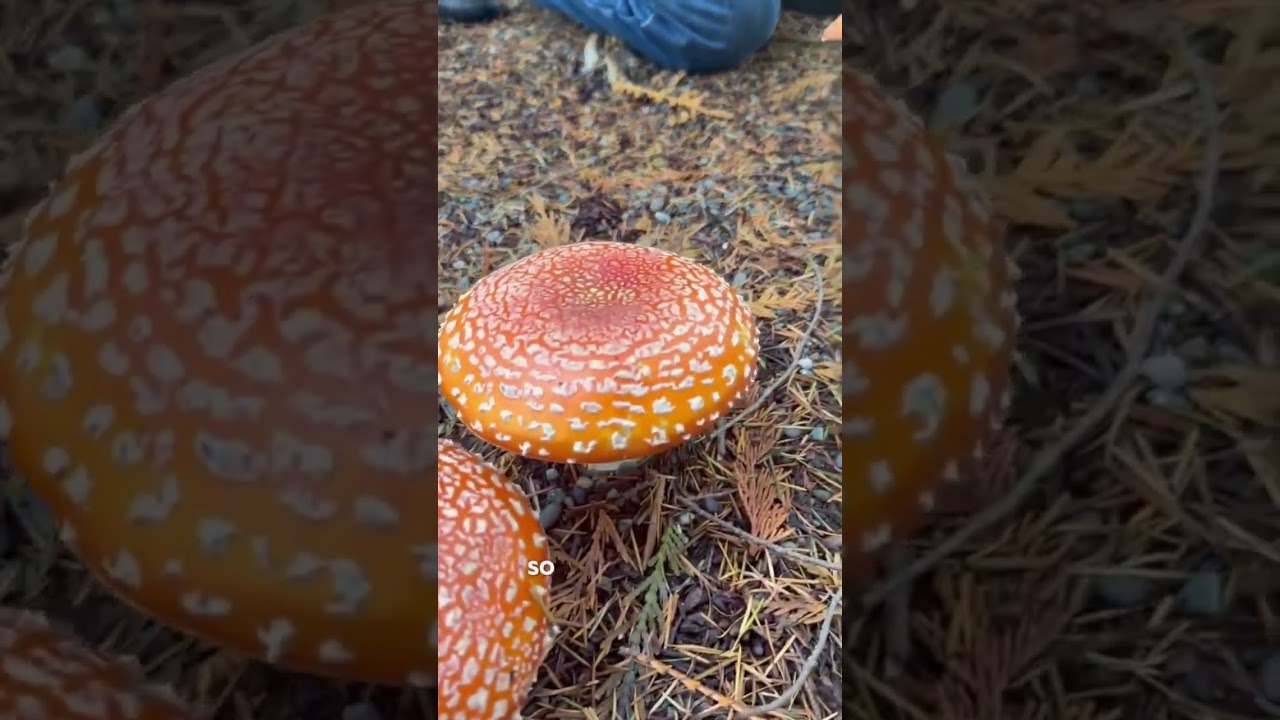
Transcript

[0:00] hi i'm paul stamets i'm underneath a

[0:02] giant old growth

[0:03] uh douglas fir and this is sporasas

[0:05] crispa the cauliflower mushroom

[0:07] this one is in absolutely perfect

[0:09] condition

[0:10] it oftentimes forms a primordium several

[0:13] feet up to six feet

[0:14] below on the root of this tree and

[0:18] it is a mushroom that produces a unique

[0:21] antibiotic called sporasal named after

[0:24] asparasus versus crispr

[0:26] and sporasal espresso allows honey

[0:29] mushrooms for instance

[0:31] to conquest great um

[0:34] land masses because very few fungi can

[0:36] compete

[0:37] with mushrooms that has spiracle so this

[0:40] is a tap root i've broken off

[0:42] this is the cauliflower mushroom process

[0:43] crispy edible in choice

[0:45] and absolutely in premo condition the

[0:48] best one i found this season

[0:50] and i'm super delighted to find this

[0:52] because

[0:53] it's one of the best of all edible

[0:57] mushrooms

[0:59] foreign

Paul Stamets
AuteurPaul Stamets

Mycologist and advocate who has dedicated his life to studying mushrooms and their transformative potential to heal people and restore the planet through medicine, agriculture, and…

Voir le profilSite web
Explorer les thèmes
Sparassis-crispaCauliflower-mushroomAntifungalMycologyEdible-mushrooms

Des questions ?

Questions fréquemment posées

Sparassol is an antimicrobial compound (methyl-2-hydroxy-4-methoxy-6-methylbenzoate) produced by Sparassis crispa that allows the mushroom to outcompete other fungi, including the highly aggressive Armillaria mellea. When tested in laboratory conditions, Sparassis crispa cultures with sparassol demonstrated impressive ability to suppress rival fungi, suggesting the compound has direct antagonistic properties against fungal competitors.
Yes, Sparassis crispa is an edible mushroom classified as 'choice,' meaning it is highly desirable for culinary use. The crispy, cauliflower-like fruiting body is considered one of the best of all edible mushrooms. However, because the mushroom grows several feet underground, wild specimens often accumulate soil debris in their intricate folds; clean specimens like the one Paul Stamets found are prized by collectors.
Although sparassol and other antifungal metabolites from Sparassis crispa were identified in a landmark 1992 study, the mushroom has received minimal subsequent research attention. Paul Stamets argues this is a significant oversight, especially given the rising threat of antibiotic-resistant fungi like Candida auris. The mushroom warrants urgent reexamination as a potential source of novel antifungal compounds.
Sparassis crispa grows from the root systems of old-growth trees, particularly Douglas firs and other conifers in temperate regions. The mushroom forms a primordium (fruiting body precursor) several feet to six feet below ground on the tree's roots, which is why it is so difficult to locate in nature.
While long thought to be parasitic, Sparassis crispa is better understood as a wood-decay fungus that causes 'brown rot,' selectively digesting cellulose while leaving lignin intact. This process can eventually weaken trees through 'brown butt rot' at the base, but it is part of the forest ecosystem's natural decomposition cycle rather than a rapid pathogen.
The specimen Paul Stamets discovered weighed nearly 3 pounds and was notable for being clean, young, succulent, well-formed, and free of the soil debris that typically resides in the mushroom's intricate folds—making it one of the best specimens he had found that season from both a culinary and collector's perspective.
Yes, Sparassis crispa can be cultivated on suitable substrates, making it potentially economically viable for both culinary and medicinal applications if future research justifies therapeutic development. This accessibility differs from rare plants or fungi that are difficult to grow in quantity.

Continuer la lecture

More from Paul

Voir tout
Amanita Muscaria: History, Identification & Safety of Fly Agaric
Featured

Amanita Muscaria: History, Identification & Safety of Fly Agaric

Amanita muscaria, the fly agaric, has ancient roots in pest control and cultural mythology. Despite its striking beauty, this mushroom poses…

1 min read
Lactarius Deliciosus: Identifying & Foraging the Saffron Cap
Featured

Lactarius Deliciosus: Identifying & Foraging the Saffron Cap

The saffron milk cap (Lactarius deliciosus) is an easy-to-identify edible mushroom with striking green staining and orange milk. Learn how t…

1 min read
How Sitting Still Proves You're Already Awakening
Featured

How Sitting Still Proves You're Already Awakening

Most people can't sit quietly without discomfort, but if you can, you're already further along spiritually than you realize. Eckhart Tolle e…

1 min read
The Missing Piece: How Real Thinking Creates Real Results
Featured

The Missing Piece: How Real Thinking Creates Real Results

Most vision boards fail because people skip the actual thinking. Eckhart Tolle reveals the rhythm that unlocks insight and the two distinct …

1 min read

Continue d’explorer

Poursuis ton chemin

Plus de sagesse et de rassemblements dans tout l’annuaire BrightStar.

Plus d’articles

Parcours toute la bibliothèque d’enseignements, d’entretiens et de guides.

Retour à tous les articles →

Enseignants et artistes

Découvre les lignées, les musiciens et les guides du monde conscient.

Explorer les artistes →

Trouver un événement

Kirtan, retraites, bains sonores, breathwork, festivals — bientôt près de chez toi.

Parcourir les événements →