EveryEvent Rome

Parcourir tous les Events

Find every event in Rome

events

Concerts & Live Music
Festivals
Sports & Recreation
Food & Drink
Arts & Culture
Community
Family & Kids
Nightlife
Comedy
Theater
Destinations populaires
BaliSedonaLos AngelesCosta RicaNew YorkSan FranciscoAustinMiamiJoshua TreeTulum
Voir toutes les catégoriesVoir toutes les destinations

Explorer toutes les fonctionnalités

Des outils puissants pour développer tes événements

Fonctionnalités de la plateforme

Tarification dynamique intelligente
Catégories de billets
Places assignées
Récupération des paniers abandonnés
Récupération des visiteurs
Dons & Prix variables
Système d'affiliation
Scanner de billets
Codes promo
Questions personnalisées
Partage de billets
Ventes additionnelles & Options
Analyses & Rapports
Séquences d'emails
Liste d'attente / Notifier / Rappeler
Explorer
Discovery HubArtists & PerformersVenuesKnowledge Base
Voir toutes les fonctionnalitésÀ propos
TarifsBlog
Language
Saved events
Parcourir tous les événements

events

Concerts & Live MusicFestivalsSports & RecreationFood & DrinkArts & CultureCommunityFamily & KidsNightlife

Destinations populaires

BaliSedonaLos AngelesCosta RicaNew YorkSan Francisco

Explorer

Discovery HubArtists & PerformersVenuesKnowledge Base

Fonctionnalités de la plateforme

Tarification dynamique intelligenteCatégories de billetsPlaces assignéesRécupération des paniers abandonnésRécupération des visiteursDons & Prix variablesSystème d'affiliationScanner de billetsCodes promoQuestions personnaliséesPartage de billetsVentes additionnelles & OptionsAnalyses & RapportsSéquences d'emailsListe d'attente / Notifier / Rappeler
Voir toutes les fonctionnalitésÀ propos
TarifsBlog
ConnexionS'inscrireOrganisateurs d'événements
  • Browse All Events
  • Concerts & Live Music
  • Festivals
  • Sports & Recreation
  • Food & Drink
  • Arts & Culture
  • Community
  • Family & Kids
  • Nightlife
  • Toutes les catégories →
  • All Destinations →
  • For Promoters
  • For Artists
  • For Venues
  • For Festivals
  • For Event Spaces
  • For Nonprofits
  • For Bloggers
  • For Speakers
  • Brand Ambassador
  • Case Studies
  • Réseau de 350K+ acheteurs
  • Récupération des paniers abandonnés
  • Tarification dynamique intelligente
  • Catégories de billets
  • Événements récurrents
  • Places assignées
  • Système d'affiliation
  • Liste d'attente / Notifier
  • Scanner de billets
  • Widget intégrable
  • Diffusion d'événements
  • Messagerie
  • Intégrations
  • Rapports
  • Toutes les fonctionnalités →
  • À propos
  • L'écosystème
  • Blog
  • Glossaire
  • Inspiration
  • Centre d'aide
  • Contact
  • Documentation API
  • Ressources de marque
  • Carrières
  • Presse
  • Conditions d'utilisation
  • Politique de confidentialité

Events

  • Browse All Events
  • Concerts & Live Music
  • Festivals
  • Sports & Recreation
  • Food & Drink
  • Arts & Culture
  • Community
  • Family & Kids
  • Nightlife
  • Toutes les catégories →

Getaways

  • All Destinations →

For Organizers

  • For Promoters
  • For Artists
  • For Venues
  • For Festivals
  • For Event Spaces
  • For Nonprofits
  • For Bloggers
  • For Speakers
  • Brand Ambassador
  • Case Studies

Fonctionnalités

  • Réseau de 350K+ acheteurs
  • Récupération des paniers abandonnés
  • Tarification dynamique intelligente
  • Catégories de billets
  • Événements récurrents
  • Places assignées
  • Système d'affiliation
  • Liste d'attente / Notifier
  • Scanner de billets
  • Widget intégrable
  • Diffusion d'événements
  • Messagerie
  • Intégrations
  • Rapports
  • Toutes les fonctionnalités →

Entreprise

  • À propos
  • L'écosystème
  • Blog
  • Glossaire
  • Inspiration
  • Centre d'aide
  • Contact
  • Documentation API
  • Ressources de marque
  • Carrières
  • Presse
  • Conditions d'utilisation
  • Politique de confidentialité
EveryEvent
© 2026 EveryEvent Rome. Tous droits réservés.
Inspiration

Question as a Gateway toDeeper Awareness and Healing

Deepak Chopra
Deepak Chopra
Sep 26, 2014
7 min de lecture

This meditation explores the role of questioning and inquiry as fundamental tools for accessing deeper states of consciousness, facilitating healing, and moving beyond conditioned patterns of thought. Rather than treating questions as obstacles, the teaching invites practitioners to use genuine inquiry as a doorway to authentic awareness and wholeness.

Lecture · 7 sections

Why Is Questioning Central to Spiritual Practice?

In contemplative traditions across cultures, the simple act of asking a genuine question represents far more than intellectual curiosity. It signals an openness to mystery, a willingness to suspend assumptions, and a readiness to encounter reality as it actually is rather than as we've been conditioned to perceive it. When we ask a true question—not a rhetorical one disguised as certainty, but an honest inquiry born from genuine not-knowing—we create a gap in the fortress of habitual thought patterns that normally dominate consciousness.

This teaching suggests that questioning is not the opposite of spiritual realization; it is one of its essential gateways. Most individuals spend their lives defending answers they inherited, never pausing to genuinely question the foundations upon which they've built their understanding of self, relationship, and meaning. The soul, by contrast, thrives in the space where authentic questions are asked and held without premature closure.

How Does Inquiry Facilitate Healing?

When we bring gentle, open inquiry to areas of pain, dysfunction, or disconnection within ourselves, something shifts. Rather than pushing pain away or adopting rigid narratives about why we suffer, inquiry invites us to turn toward the experience with curiosity rather than judgment. This subtle reorientation—from resistance and interpretation to genuine wondering—allows previously trapped or contracted energy to become fluid again.

Healing in this context is not primarily about symptom relief, though that may follow. It is about restoring wholeness by dissolving the fragmentation that occurs when we cut ourselves off from honest relationship with our own experience. Questions like "What is this really asking of me?" or "What does this part of myself need to be heard?" or simply "What if I allowed this to be true?" can catalyze profound shifts in consciousness that medicine or willpower alone cannot achieve.

What Distinguishes a Genuine Question from Defensive Thinking?

A genuine question arises from authentic uncertainty and vulnerability. It does not already contain its answer. It does not function to defend an existing position or gather ammunition for an argument. A genuine question is asked by someone willing to be changed by the answer, willing to surrender the comfort of what they think they already know.

By contrast, pseudo-questions are rhetorical devices designed to reinforce beliefs: "Don't you think people who behave that way are foolish?" or "Isn't it obvious that the universe doesn't care about individuals?" These are not inquiries—they are disguised assertions. Genuine questioning opens space; pseudo-questioning closes it.

The healing affirmation practice embedded in this teaching invites practitioners to return again and again to the quality of genuine wondering as a baseline state. This is not the anxious questioning of someone who cannot make decisions. It is the spacious, alert uncertainty of someone fully present to what is actually happening, rather than defending against what might happen.

How Can We Practice Genuine Inquiry in Daily Life?

One simple entry point is to pause when you notice yourself defending a position—about another person, about a situation, about yourself. At that moment, ask yourself: What if I'm wrong? Not in order to dismiss your perception, but in order to genuinely open to alternative ways of seeing. Hold the question lightly. Do not rush to answer. Simply notice what emerges when you create space for genuine uncertainty.

Another practice involves bringing inquiry to sensations, emotions, or thought patterns that typically trigger automatic responses. Instead of "I'm anxious, I need to fix this," try: "What is this anxiety actually trying to communicate?" Instead of "I'm angry at this person," try: "What fear or unmet need might underlie this anger?" These questions are not meant to bypass genuine emotion or bypass legitimate concerns. Rather, they create a container large enough to hold both the feeling and awareness of the feeling simultaneously.

  • Practice presence with questions: Rather than using questions as weapons or as a way to mentally escape the present moment, ask them while remaining grounded in breath and body sensation. This keeps inquiry rooted in awareness rather than trapped in loops of anxious thinking.
  • Hold questions without rushing to answers: Modern culture trains us to seek quick solutions. Genuine inquiry sometimes requires sitting with a question for days, weeks, or longer, allowing the answer to unfold from deeper layers of consciousness rather than from surface-level intellect.
  • Question your questions: As you develop the capacity for genuine inquiry, periodically examine whether your questions are truly open or whether they contain hidden agendas. This meta-inquiry itself becomes part of the healing process.

What Is the Relationship Between Questioning and Self-Knowledge?

The ancient command "Know thyself" cannot be fulfilled through analysis alone. Genuine self-knowledge requires the willingness to encounter yourself as you actually are, not as you believe yourself to be or as you wish to be. This encounter happens through questioning. When we ask "Who am I really?" or "What am I avoiding seeing about myself?" or "Where have I abandoned my own truth?"—we create the conditions for authentic self-recognition.

This is distinct from self-judgment or self-improvement. Those frameworks still rely on an imagined "better self" to strive toward, which perpetuates inner division. Genuine inquiry, by contrast, asks: What is actually here? What wants to be known? What has been overlooked? The answers that emerge from such questioning often surprise us because they come from deeper layers of consciousness than the personality, with its familiar narratives and defensive strategies.

How Does Questioning Connect to Wholeness?

The teaching of "Soul of Healing" suggests that wholeness is not a destination to be reached but a condition to be recognized and returned to. We are whole; the fragmentation is in our perception and in our relationship to our own experience. Questions serve as keys that unlock the gates we've constructed against certain truths about ourselves.

When all aspects of experience can be held with genuine curiosity rather than judgment or avoidance, the sense of divided self begins to dissolve. You are no longer someone "trying to be good" while secretly harboring shame or rage. You are no longer someone "dealing with a problem" while simultaneously judging yourself for having it. Instead, you become someone in authentic relationship with the full spectrum of your humanity, and this acceptance itself becomes the foundation for genuine healing and transformation.

Where to Go From Here

If this teaching resonates, consider beginning a simple practice: each day, choose one area of your life or one feeling state you typically defend against or judge. Bring genuine, open inquiry to it. Ask not as a way to change or fix it, but as a way to know it more fully. Write down your questions. Sit with them. Notice what emerges without forcing conclusions. Over time, this practice of holding questions open can reshape your relationship to yourself, others, and the deep intelligence that underlies all healing.

Explore deeper contemplative practices that emphasize inquiry as a path to realization. Study teachers and traditions that value the question as sacred in itself, not merely as a stepping stone to answers. Most importantly, cultivate the courage to ask your own deep questions and the patience to live with them—allowing them to transform you from within.
Deepak Chopra
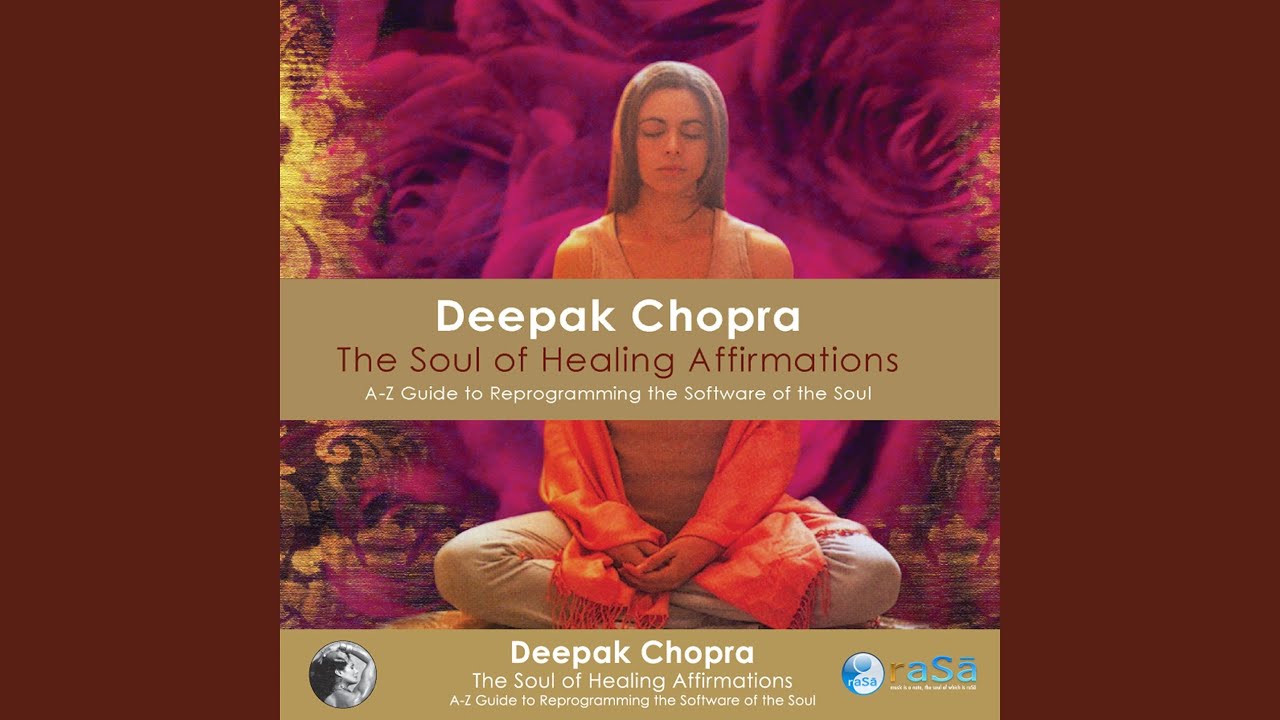
AuteurDeepak Chopra

Indian-American physician and author who has, more than any other figure, brought Vedic spiritual teachings into the mainstream Western consciousness. A former chief of staff at Ne…

Voir le profilSite web
Explorer les thèmes
QuestioningInquiryHealingConsciousnessAffirmations

Des questions ?

Questions fréquemment posées

Rather than pushing away anxiety or trying to fix it, genuine inquiry invites you to ask what the emotion is actually communicating or what unmet need underlies it. This shifts the relationship from resistance to curiosity, allowing stuck energy to become fluid and revealing deeper wisdom within the feeling itself.
Genuine questions arise from authentic uncertainty and openness to being changed by the answer. Pseudo-questions are rhetorical devices designed to defend existing beliefs. A genuine question doesn't already contain its answer and requires vulnerability—a willingness to not-know.
The right questions are those asked from genuine curiosity rather than judgment or the desire to 'fix' yourself. Questions like 'What is this actually asking of me?' or 'What does this part of myself need to be heard?' create space for authentic discovery rather than self-improvement strategies.
Genuine inquiry can be a powerful complement to professional care by shifting your relationship to your experience and facilitating deeper self-knowledge. However, it works alongside other forms of support rather than replacing them, particularly for acute mental health or medical conditions.
Modern culture trains us to seek quick solutions, but genuine inquiry often requires holding questions for days, weeks, or longer. Allow the answer to unfold from deeper layers of consciousness rather than rushing to an intellectual response. This patience itself becomes part of the healing.
True inquiry is not the anxious doubt of someone unable to decide, nor the defensive skepticism of someone protecting their worldview. It is the spacious, alert openness of someone fully present to what is actually happening, willing to be changed by reality.
Ask your questions while remaining anchored in breath and body sensation. This prevents inquiry from becoming trapped in loops of anxious thinking and keeps it rooted in present-moment awareness, allowing answers to emerge from your whole being rather than just the thinking mind.

Continuer la lecture

More from Deepak

Voir tout
Acceptance: The Foundation of Inner Peace and Healing
Featured

Acceptance: The Foundation of Inner Peace and Healing

Deepak Chopra explores acceptance as a core principle of spiritual practice and emotional well-being. Learn why embracing what is transforms…

1 min read
Chakra Seed Mantras: Lam, Vam, Ram, Yan, Ham, Sham, Om
Featured

Chakra Seed Mantras: Lam, Vam, Ram, Yan, Ham, Sham, Om

Learn the seven chakra seed mantras and how to use them for balancing body, mind, and soul through guided vocal practice with Deepak Chopra.…

1 min read
How Sitting Still Proves You're Already Awakening
Featured

How Sitting Still Proves You're Already Awakening

Most people can't sit quietly without discomfort, but if you can, you're already further along spiritually than you realize. Eckhart Tolle e…

1 min read
The Missing Piece: How Real Thinking Creates Real Results
Featured

The Missing Piece: How Real Thinking Creates Real Results

Most vision boards fail because people skip the actual thinking. Eckhart Tolle reveals the rhythm that unlocks insight and the two distinct …

1 min read

Continue d’explorer

Poursuis ton chemin

Plus de sagesse et de rassemblements dans tout l’annuaire BrightStar.

Plus d’articles

Parcours toute la bibliothèque d’enseignements, d’entretiens et de guides.

Retour à tous les articles →

Enseignants et artistes

Découvre les lignées, les musiciens et les guides du monde conscient.

Explorer les artistes →

Trouver un événement

Kirtan, retraites, bains sonores, breathwork, festivals — bientôt près de chez toi.

Parcourir les événements →