EveryEvent Rome

Parcourir tous les Events

Find every event in Rome

events

Concerts & Live Music
Festivals
Sports & Recreation
Food & Drink
Arts & Culture
Community
Family & Kids
Nightlife
Comedy
Theater
Destinations populaires
BaliSedonaLos AngelesCosta RicaNew YorkSan FranciscoAustinMiamiJoshua TreeTulum
Voir toutes les catégoriesVoir toutes les destinations

Explorer toutes les fonctionnalités

Des outils puissants pour développer tes événements

Fonctionnalités de la plateforme

Tarification dynamique intelligente
Catégories de billets
Places assignées
Récupération des paniers abandonnés
Récupération des visiteurs
Dons & Prix variables
Système d'affiliation
Scanner de billets
Codes promo
Questions personnalisées
Partage de billets
Ventes additionnelles & Options
Analyses & Rapports
Séquences d'emails
Liste d'attente / Notifier / Rappeler
Explorer
Discovery HubArtists & PerformersVenuesKnowledge Base
Voir toutes les fonctionnalitésÀ propos
TarifsBlog
Language
Saved events
Parcourir tous les événements

events

Concerts & Live MusicFestivalsSports & RecreationFood & DrinkArts & CultureCommunityFamily & KidsNightlife

Destinations populaires

BaliSedonaLos AngelesCosta RicaNew YorkSan Francisco

Explorer

Discovery HubArtists & PerformersVenuesKnowledge Base

Fonctionnalités de la plateforme

Tarification dynamique intelligenteCatégories de billetsPlaces assignéesRécupération des paniers abandonnésRécupération des visiteursDons & Prix variablesSystème d'affiliationScanner de billetsCodes promoQuestions personnaliséesPartage de billetsVentes additionnelles & OptionsAnalyses & RapportsSéquences d'emailsListe d'attente / Notifier / Rappeler
Voir toutes les fonctionnalitésÀ propos
TarifsBlog
ConnexionS'inscrireOrganisateurs d'événements
  • Browse All Events
  • Concerts & Live Music
  • Festivals
  • Sports & Recreation
  • Food & Drink
  • Arts & Culture
  • Community
  • Family & Kids
  • Nightlife
  • Toutes les catégories →
  • All Destinations →
  • For Promoters
  • For Artists
  • For Venues
  • For Festivals
  • For Event Spaces
  • For Nonprofits
  • For Bloggers
  • For Speakers
  • Brand Ambassador
  • Case Studies
  • Réseau de 350K+ acheteurs
  • Récupération des paniers abandonnés
  • Tarification dynamique intelligente
  • Catégories de billets
  • Événements récurrents
  • Places assignées
  • Système d'affiliation
  • Liste d'attente / Notifier
  • Scanner de billets
  • Widget intégrable
  • Diffusion d'événements
  • Messagerie
  • Intégrations
  • Rapports
  • Toutes les fonctionnalités →
  • À propos
  • L'écosystème
  • Blog
  • Glossaire
  • Inspiration
  • Centre d'aide
  • Contact
  • Documentation API
  • Ressources de marque
  • Carrières
  • Presse
  • Conditions d'utilisation
  • Politique de confidentialité

Events

  • Browse All Events
  • Concerts & Live Music
  • Festivals
  • Sports & Recreation
  • Food & Drink
  • Arts & Culture
  • Community
  • Family & Kids
  • Nightlife
  • Toutes les catégories →

Getaways

  • All Destinations →

For Organizers

  • For Promoters
  • For Artists
  • For Venues
  • For Festivals
  • For Event Spaces
  • For Nonprofits
  • For Bloggers
  • For Speakers
  • Brand Ambassador
  • Case Studies

Fonctionnalités

  • Réseau de 350K+ acheteurs
  • Récupération des paniers abandonnés
  • Tarification dynamique intelligente
  • Catégories de billets
  • Événements récurrents
  • Places assignées
  • Système d'affiliation
  • Liste d'attente / Notifier
  • Scanner de billets
  • Widget intégrable
  • Diffusion d'événements
  • Messagerie
  • Intégrations
  • Rapports
  • Toutes les fonctionnalités →

Entreprise

  • À propos
  • L'écosystème
  • Blog
  • Glossaire
  • Inspiration
  • Centre d'aide
  • Contact
  • Documentation API
  • Ressources de marque
  • Carrières
  • Presse
  • Conditions d'utilisation
  • Politique de confidentialité
EveryEvent
© 2026 EveryEvent Rome. Tous droits réservés.
Inspiration

Tayraa Naam: A Studio Conversationon Devotional Chant Collaboration

Snatam Kaur
Snatam Kaur
Mar 15, 2024
7 min de lecture
À regarder · 8
In a rare studio conversation, Snatam Kaur (Sikh kirtan tradition) and Jahnavi Harrison (Vaishnava/Krishna bhakti tradition) unveil the creative and spiritual roots of their new single, Tayraa Naam. Both artists emphasize the power of Divine name repetition (kirtan and the repetition of sacred sound) as central to their practices. The song distills a longer sacred poem into an accessible, loop-able chant—a deliberate choice by both artists to give listeners a "taste" that might inspire deeper spiritual exploration. The session reveals how two distinct traditions share a common foundation: the belief that chanting the Divine name heals, and that bringing people into community song is both personal mission and cross-tradition bridge.

Lecture · 7 sections

Why Two Kirtan Traditions Come Together

Snatam Kaur opens the conversation by acknowledging a long admiration: "I've loved J's music for so long and especially connected with it during the pandemic." What makes this collaboration remarkable is that both artists were listening to each other's recordings without ever having met formally. "I didn't know you were listening to my music," Jahnavi reflects, underlining a parallel journey of musical discovery that happened independently, then ripened into intentional collaboration.

The two traditions represented here have different lineages but share core commitments. Jahnavi describes her background: "The tradition that I've grown up with is the Vaishnava tradition or Krishna bhakti—sometimes it's known as Hari Krishna—because that's what we sing a lot. It's a tradition that emphasizes kirtan, or the repetition of the Divine name, as the sort of be-all and end-all. It's the most important practice." Snatam, raised in the Sikh tradition, echoes this: "I was born and raised in the Sikh tradition. Our practice is also that the name of the One is the most powerful medicine, and sound current can heal us." Both artists ground their work in the conviction that chanting sacred names carries transformative power—not as metaphor, but as lived spiritual technology.

What deepens the collaboration is genuine cross-tradition appreciation. Jahnavi says of Snatam's tradition: "You're from the Hadi Krishna tradition, and the teachings and what you convey in your music have deeply affected me. I've taken that into my practice and feel like it's helped me on my path." Meanwhile, Snatam notes: "I've never formally recorded anything from that tradition [Krishna bhakti], but I have a deep appreciation for the Sikh tradition." The collaboration isn't appropriation or mere fusion—it's two lineage-bearers recognizing that their traditions, though specific and unique, rest on the same foundation of Divine name power.

What Does Tayraa Naam Actually Mean?

The lyrics carry profound theological weight in compact form. Snatam explains the meaning: "Duke, Duke—all the troubles, all the sorrows, all the pains—bungan are destroyed, loosened, just dissolved—in Tayraa Naam, in your name." The Sanskrit/Punjabi couplet accomplishes something economical: it names suffering (dukh, pain; sorrows, troubles) and declares its dissolution through repetition of the Divine name. This is not consolation poetry. It asserts that the act of chanting itself—invoking the name—dissolves suffering's grip. Jahnavi responds to the lyrical power: "It's so much just in a few lyrics. It's really beautiful."

This compression of meaning into singable form matters. Both artists discuss how sacred texts often contain longer passages—poems of significant length—that might overwhelm or intimidate a newcomer. "I've been trying to do in my music as well," Jahnavi says, "find ways to give people a link or an open door to something that might be too long or it might feel intimidating if you were to do the whole thing. But just to give a taste that inspires hopefully a deeper dive."

Why Wait Decades to Record a Tune?

One striking detail emerges: Snatam wrote this melody in her late twenties, but only now—at fifty-one—has she recorded it formally. When asked why the delay, her answer reveals something about artistic maturity and permission. "At fifty-one, I kind of felt like the freedom to just bring forward the shorter section as a chant." The word "freedom" is key. It suggests that aging, life experience, and possibly a shift in artistic vision gave her permission to extract the essential core of a longer work and offer it as its own complete piece. This resonates with Jahnavi's parallel impulse: the desire to make spiritual practice accessible, not as watering down, but as dharmic generosity.

How Does the Arrangement Honor Both Traditions?

The production credits reveal a multi-tradition ensemble: Snatam Kaur on vocals and harmonium (Sikh sacred instruments), Jahnavi Harrison on vocals and violin, Sukhmani Rayat on vocals, backing vocals, tabla, and percussion, Grecco Buratto on acoustic and electric guitars, and Ram Dass Khalsa on keyboards, piano, and backing vocals. The recording took place at El Desierto in Mexico City, with additional sessions in New Jersey.

What stands out from the conversation is that Snatam intuitively knew Jahnavi belonged on the track before the formal collaboration. "When my band and I had put down the basic track, I just kept hearing Jahnavi—she'll sing here, and the violin—and something inside me knew all along that Jahnavi was going to be on it." This wasn't planned in advance; it was a kind of musical knowing that preceded the actual session. When the two finally sang together, Snatam reports: "The whole track just kind of came to life. It bloomed. It felt like magic."

What Makes Studio Collaboration Spiritual?

Snatam reflects on the recording experience itself: "Sometimes recording can be a painful process, and sometimes you just get a very smooth and beautiful experience, and that's how it felt today. I'm really relieved because you never know what to expect, but it was really magical." There's a vulnerability here—the acknowledgment that entering a studio with another artist carries risk, uncertainty, the possibility of friction. Instead, what emerged was ease and flow.

The magic wasn't merely technical or musical. It was relational: two artists from different traditions, who had honored each other from a distance, coming together in a container (the studio, the song, the spiritual practice itself) where their voices could interweave. Jahnavi adds: "I love singing with you. We're doing it for the first time virtually"—suggesting that even the separation of the recording process didn't diminish the sense of union.

Why Make Tayraa Naam Loop-able?

The artists mention that their recording extends to eight minutes, and they considered looping it further. This choice reflects a deep understanding of kirtan practice. Looping—repeating the chant over extended time—is not redundant. In the bhakti and Sikh traditions, repetition deepens the practice. The name isn't chanted once for intellectual understanding; it's chanted to allow a gradual dissolution of the thinking mind into the rhythmic, devotional body. By structuring Tayraa Naam for looping, Snatam and Jahnavi are creating a container for listeners to move beyond passive listening into active, embodied practice. As Jahnavi notes about the extended version: "I could listen to that for hours and chant along for hours."

Where to Go From Here

If you're drawn to this conversation, the natural next step is to listen to Tayraa Naam itself and experiment with chanting it repeatedly. Notice how the melody and harmony work—how Snatam's and Jahnavi's voices interweave. If you're interested in the spiritual foundations these artists discuss, explore Sikh kirtan and Vaishnava bhakti separately to understand their distinct histories and theologies, then listen again to hear how this single bridges them. You might also explore the longer sacred poem from which this chant was extracted, to understand what Snatam means by "giving a taste" of a deeper work. Finally, consider whether your own spiritual practice includes repetition—the chanting of a name, a mantra, a phrase—and if so, how extended, unbroken repetition shifts your state. The track becomes an invitation not just to listen, but to practice.

]]>
Transcript

[0:00] I've Loved J's music for so long and

[0:03] especially connected with it during the

[0:05] pandemic I didn't know you were

[0:06] listening to my music and I was

[0:08] listening to your music but we had only

[0:11] met very very

[0:14] briefly I just was so inspired by

[0:17] hearing in your recordings how people

[0:19] just sing to the very traditional Kon

[0:22] call and response the intention with

[0:25] this piece is to create something really

[0:28] super easy for people to chant

[0:31] it's a tune that I that I wrote in my

[0:34] late 20s is there any reason that you

[0:37] hadn't till now recorded this even

[0:39] though you composed the tune so many

[0:41] years ago this is a a shorter section of

[0:45] a longer poem I guess at

[0:48] 51 I kind of felt like the uh freedom to

[0:52] just bring forward the shorter section

[0:55] as a chant that that's really something

[0:57] that I've been trying to do in my music

[1:00] as well you know find ways to give

[1:03] people a a link or a an open door to

[1:08] something that might be too long or it

[1:10] might feel intimidating if you were to

[1:12] do the whole thing but just to give a

[1:14] taste that inspires hopefully a deeper

[1:18] dive you know in whatever way in the

[1:20] practice or learning about the meaning

[1:23] the meaning is really profound for me

[1:28] Duke the Duke all the the troubles all

[1:31] the Sorrows all the pains bungon are

[1:35] destroyed you know loosened just

[1:38] dissolved in teranam in in your name

[1:42] it's so much just in a few

[1:45] lyrics it's really beautiful I I love

[1:48] the opportunity of of hearing

[1:51] you um because I could listen to to that

[1:54] for hours and chant along for hours yeah

[1:56] we got a little lost in

[1:59] our recording is only 8 minutes but I

[2:01] think we we wanted to Loop it for a few

[2:05] more

[2:05] [Music]

[2:06] rounds okay that was so beautiful thank

[2:10] you I love singing with

[2:13] you we're doing it for the first time

[2:15] virtually

[2:17] [Music]

[2:19] but the tradition that I've grown up

[2:22] with is the vnav tradition or Krishna

[2:25] bakti sometimes it's known as Hari

[2:28] Krishna cuz that's what we sing a lot is

[2:30] a tradition that

[2:32] emphasizes Kiran or the repetition of

[2:35] the Divine name as the sort of be all

[2:39] and end all it's the most important

[2:41] practice and that's something that I've

[2:43] been doing for pretty much all my life

[2:46] yeah I was born and raised in the seik

[2:49] tradition our practice is also that the

[2:53] N the name of the one is the most

[2:56] powerful medicine and sound current can

[3:00] heal us we have a sacred text that's

[3:03] filled with poems and we celebrate in

[3:06] our spiritual practice by singing those

[3:09] those poems and bringing them to life

[3:12] for us in our hearts and have a deep

[3:15] appreciation for for the seek tradition

[3:18] and I've never formally recorded

[3:20] anything from that tradition you're from

[3:23] the Hadi Krishna tradition and the the

[3:26] teachings and and what you convey in

[3:28] your music have deeply affected me I've

[3:30] taken that into my practice and feel

[3:34] like it's helped me on my path and it's

[3:37] beautiful to celebrate the the

[3:39] specificity and the uniqueness of each

[3:41] tradition but also to come together is

[3:44] is very

[3:47] [Music]

[3:50] powerful today was really beautiful um

[3:53] sometimes recording can be a painful

[3:56] process and uh sometimes you just get a

[3:59] very smooth and beautiful experience and

[4:02] that's how it felt today I'm really

[4:04] relieved cuz you never know what to

[4:06] expect but it was really magical I would

[4:09] say when my band and I had put down the

[4:11] basic track and I just kept hearing

[4:16] Jovie and she'll sing here and the

[4:18] violin and something inside me knew all

[4:21] along that Johnny ve was going to be on

[4:23] it but then today was just filled with

[4:26] so much magic the whole track just kind

[4:29] of to life it bloomed it felt like

[4:35] [Music]

[4:57] [Music]

[4:59] itom

Snatam Kaur
AuteurSnatam Kaur

Snatam Kaur is a world-renowned, Grammy-nominated devotional singer, touring musician, teacher, and author known for her luminous voice and the heartfelt depth of her music and tea…

Voir le profilSite web
Explorer les thèmes
KirtanBhaktiDevotional-musicSikh-traditionVaishnava

Des questions ?

Questions fréquemment posées

Tayraa Naam means "Your Name." The lyrics declare that all troubles, sorrows, and pains are dissolved or destroyed in the Divine name. Chanting the name itself is presented as the healing mechanism, not mere symbolic language.
Snatam wrote the tune in her late twenties but felt she only had the freedom at fifty-one to extract the shorter chant section from a longer poem and offer it as its own complete piece. This reflects a maturity about making spiritual practice accessible without oversimplifying.
Both traditions emphasize the repetition of the Divine name as central spiritual practice and healing medicine. The Vaishnava/Krishna bhakti tradition centers on chanting divine names from Hindu sacred texts, while the Sikh tradition uses the Sikh Gurus' poetry and emphasizes sound current healing. Despite lineage differences, both share the belief that chanting the name transforms consciousness.
The two artists listened to each other's music independently, especially during the pandemic, without knowing the other was a fan. They had only met briefly before Snatam felt inspired to ask Jahnavi to appear on Tayraa Naam, and their first full musical session together felt seamless and magical.
Looping the chant allows listeners to move beyond passive listening into embodied, repetitive practice. In both Sikh and bhakti traditions, extended chanting is understood to gradually dissolve the thinking mind into devotional rhythm, deepening the healing effect of the name repetition.
Both artists describe extracting a shorter, singable section from longer sacred texts so newcomers can enter the practice without feeling intimidated. The goal is to give a "taste" that inspires deeper exploration, not to simplify or water down the tradition's significance.

Continuer la lecture

More from Snatam

Voir tout
By Thy Grace: Snatam Kaur's Twenty-Five Years of Mantra
Featured

By Thy Grace: Snatam Kaur's Twenty-Five Years of Mantra

From a Colorado birth and a California childhood to a Grammy stage — Snatam Kaur marks 25 years of sacred chant with the By Thy Grace tour, …

1 min read
Long Time Sun: Kirtan and Blessing in Live Song
Featured

Long Time Sun: Kirtan and Blessing in Live Song

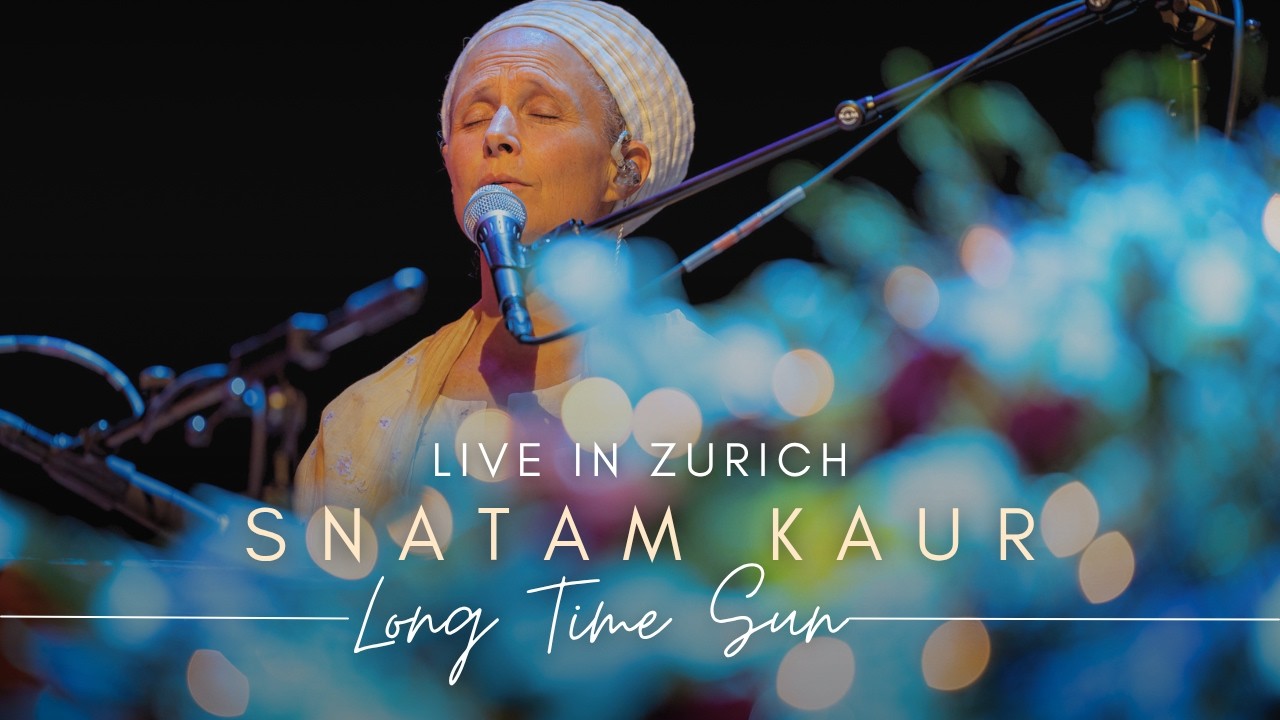
A live performance of the devotional blessing "Long Time Sun" recorded in Zurich featuring clarinet, three-part harmonies, and tabla.…

1 min read
Yemaya Reimagined: Ocean Goddess Chant Unites Voices
Featured

Yemaya Reimagined: Ocean Goddess Chant Unites Voices

A new duet celebrating the Yoruba ocean goddess brings together two voices in a healing chant born from serendipitous meeting in Costa Rica.…

1 min read
Ocean Goddess Rising: Two Voices Reimagine Yemaya
Featured

Ocean Goddess Rising: Two Voices Reimagine Yemaya

Deva Premal and Ajeet unite in a devotional collaboration honoring Yemaya, the Yoruba ocean goddess, recorded in Costa Rica with arbutar acc…

1 min read

Continue d’explorer

Poursuis ton chemin

Plus de sagesse et de rassemblements dans tout l’annuaire BrightStar.

Plus d’articles

Parcours toute la bibliothèque d’enseignements, d’entretiens et de guides.

Retour à tous les articles →

Enseignants et artistes

Découvre les lignées, les musiciens et les guides du monde conscient.

Explorer les artistes →

Trouver un événement

Kirtan, retraites, bains sonores, breathwork, festivals — bientôt près de chez toi.

Parcourir les événements →