What Is the Gayatri Mantra?
The Gayatri Mantra is an ancient Sanskrit invocation from the Rigveda, one of Hinduism's oldest sacred texts. The mantra reads: "Om Bhur Bhuvah Svah, Tat Savitur Varenyam, Bhargo Devasya Dhimahi, Dhiyo Yo Nah Prachodayat."
In translation, the mantra invokes: "Meditating upon the adorable, enchanting and radiant source of all things, we awaken to the divine light of pure consciousness." The mantra addresses Savitri, the solar deity representing the vital life force and illuminating power of existence. Rather than asking for external blessings, the Gayatri Mantra directs attention inward—toward recognizing the divine light already present within consciousness itself.
This inward-turning quality distinguishes the Gayatri from many other mantras. It is not transactional prayer but an act of meditation: a deliberate focusing of mind on the radiant source of awareness. When chanted with attention, the Gayatri becomes a tool for recognizing that the "adorable, enchanting source" is not separate from the one who chants, but fundamental to their own consciousness.
Why Is 108 the Traditional Number of Repetitions?
The number 108 holds deep significance across Hindu, Buddhist, and yogic traditions. This is not arbitrary: 108 appears repeatedly in sacred geometry, astronomical cycles, and the architecture of the body itself.
- Cosmic significance: 108 represents the distance between the Earth and the Sun in terms of solar diameters, and the distance between the Earth and the Moon in terms of lunar diameters. This numerical harmony reflects a deep relationship between human consciousness and celestial cycles.
- Anatomical correspondence: Tantric and yogic philosophy identifies 108 energy points, or marma points, in the human body. Chanting 108 times is believed to activate and harmonize these subtle energy centers.
- Philosophical meaning: In some traditions, 108 represents the complete journey through all states of consciousness—from gross to subtle to transcendent awareness.
- Practical duration: Chanting 108 cycles of the Gayatri Mantra creates a sustained meditation practice lasting approximately 20–25 minutes, long enough to allow the mind to settle but not so long as to invite fatigue or distraction.
The 108-cycle structure is not merely symbolic; it creates a container for practice. The repetition itself—the rhythmic return to the same words, the same intention—trains the mind to remain stable and focused. With each cycle, layers of surface thought begin to quiet, allowing deeper attention to emerge.
How Does Mantra Meditation Work?
Mantra practice operates through multiple channels simultaneously: sonic, semantic, and energetic. When you chant the Gayatri Mantra, several things occur:
Sound vibration: Sanskrit mantras are constructed with precise phonetic qualities. Each syllable is said to activate specific energy channels and nerve plexuses in the body. The Gayatri, with its particular sequence of vowels and consonants, creates vibrations that are believed to stimulate the subtle nervous system and clear energetic blockages.
Meaning and intention: Unlike some mantras that work primarily through sound, the Gayatri engages the intellect. The meaning—"awakening to divine light"—provides a conceptual anchor. As you repeat the mantra, you are not merely producing sound; you are reinforcing an intention to recognize consciousness itself.
Stabilization of mind: The repetitive structure of mantra practice naturally calms mental agitation. Rather than fighting thoughts or trying to suppress them through force, the mantra gives the mind a focus. Like a river that flows more smoothly when given a clear channel, the mind settles when given a meaningful object of attention. After many cycles, the gap between one repetition and the next may widen; awareness may deepen into silence even while the chanting continues.
Rhythm and breath: Traditional Gayatri chanting follows specific rhythmic patterns tied to the breath. This alignment of sound, breath, and movement creates a unified psychosomatic experience. The body, breath, and mind move together, creating coherence rather than fragmentation.
The Structure of a 108-Cycle Gayatri Practice
A complete 108-cycle Gayatri session typically follows this arc:
Opening (cycles 1–9): The first few cycles serve as an arrival. The mind is often still busy with the concerns of daily life. There is no need to force attention; simply chant and allow the mind to gradually draw inward. By the ninth cycle, the momentum of practice begins to establish itself.
Deepening (cycles 10–90): This is the substantial body of the practice. The mantra becomes less effortful; it flows more naturally. Many practitioners report that somewhere in this middle section, the boundary between "I am chanting" and "the chanting is happening" becomes less distinct. The personal, effortful self steps back, and the mantra seems to chant itself. This is not a sign of inattention but of deepening absorption.
Completion (cycles 91–108): The final cycles carry a quality of resolution. There is often a sense of the practice coming to natural completion. By the 108th cycle, the mind is typically more settled, the breath more subtle, and the distinction between sound and silence more transparent. It is common to sit in silence for several minutes after the final cycle, allowing the effects of the practice to integrate.
How to Practice: Practical Guidance
Find a quiet space: While the Gayatri can be chanted anywhere, it benefits from a setting free of interruption. Even 20 minutes of undisturbed time allows deeper focus to emerge.
Sit comfortably upright: Traditional practice is done seated, with the spine straight. This allows energy to flow more freely through the central channel and supports alertness without tension.
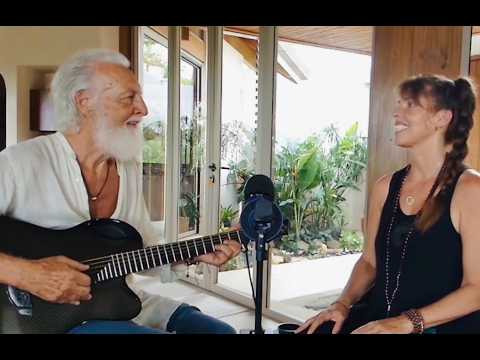
Learn the melody: The Gayatri is traditionally chanted in a specific melodic mode (raga). Listening to recordings by practitioners like Deva Premal and Miten allows you to absorb the correct pronunciation and intonation. The melody is not ornamental; it is integral to the practice's effectiveness.
Begin gently: There is no need to push or strain. Chant at a volume and pace that feels natural. Many practitioners find that as the mind settles, the volume naturally decreases and the pace slows.
Use a mala or counter: A mala is a string of 108 beads used to count repetitions. Moving one bead with each cycle keeps the mind engaged and removes the need to count mentally. This frees attention for deeper absorption in the mantra's meaning.
Maintain gentle focus: As you chant, allow your awareness to rest on the meaning of the mantra—the invocation of divine light and pure consciousness. If the mind wanders, gently return it to the chanting without self-judgment. Wandering and returning is the entire practice; there is no failure in this process.
Sit afterward: After completing 108 cycles, do not immediately stand or resume activity. Sit quietly for at least five minutes, allowing the calming effects to deepen and integrate into your nervous system.
The Inner Transformation Through Repetition
One of the striking features of sustained mantra practice is the shift that occurs over time. In the early cycles, the mantra feels like something you are doing. You are aware of the effort, the pronunciation, the counting. But as the practice deepens—particularly across the 108 cycles—something reverses.
The mantra begins to feel less like an action and more like a recognition. The words "awaken to the divine light of pure consciousness" are no longer a prayer directed toward a distant goal. They begin to feel like a description of what is already true, already present. The practice reveals not that consciousness is far away and difficult to access, but that it is intimately close, needing only attention to be recognized.
This shift does not happen through belief or imagination. It arises through the accumulated effect of returning, again and again, to the same intention. Each cycle plants a seed. The 108 cycles together create a field of attention in which transformation becomes possible.
Where to Go From Here
If you are new to the Gayatri, begin with the 108-cycle recording as a guided practice. Let the melody and rhythm carry you; do not concern yourself with perfect understanding on the first attempt. The mantra reveals its depths over time and through repetition.
As you become familiar with the practice, consider adding it to a regular meditation routine—perhaps 2–3 times per week, or daily if you are drawn to it. Some practitioners find that a single 108-cycle session creates enough clearing and settling that it becomes a natural anchor point in the week.
You may also explore learning the Gayatri without the musical support, allowing your own voice to carry the mantra. This deeper engagement with pronunciation and intonation can increase the subtle effects.
Finally, remember that the goal of mantra practice is not to achieve a special state or gain something you do not have. It is to recognize what is already true: that the source of light, intelligence, and consciousness that the mantra invokes is not distant, not other, but the very ground of your own awareness. The 108 cycles are simply 108 invitations to notice this truth that persists beyond all change.
]]>